← Back Anchal K.
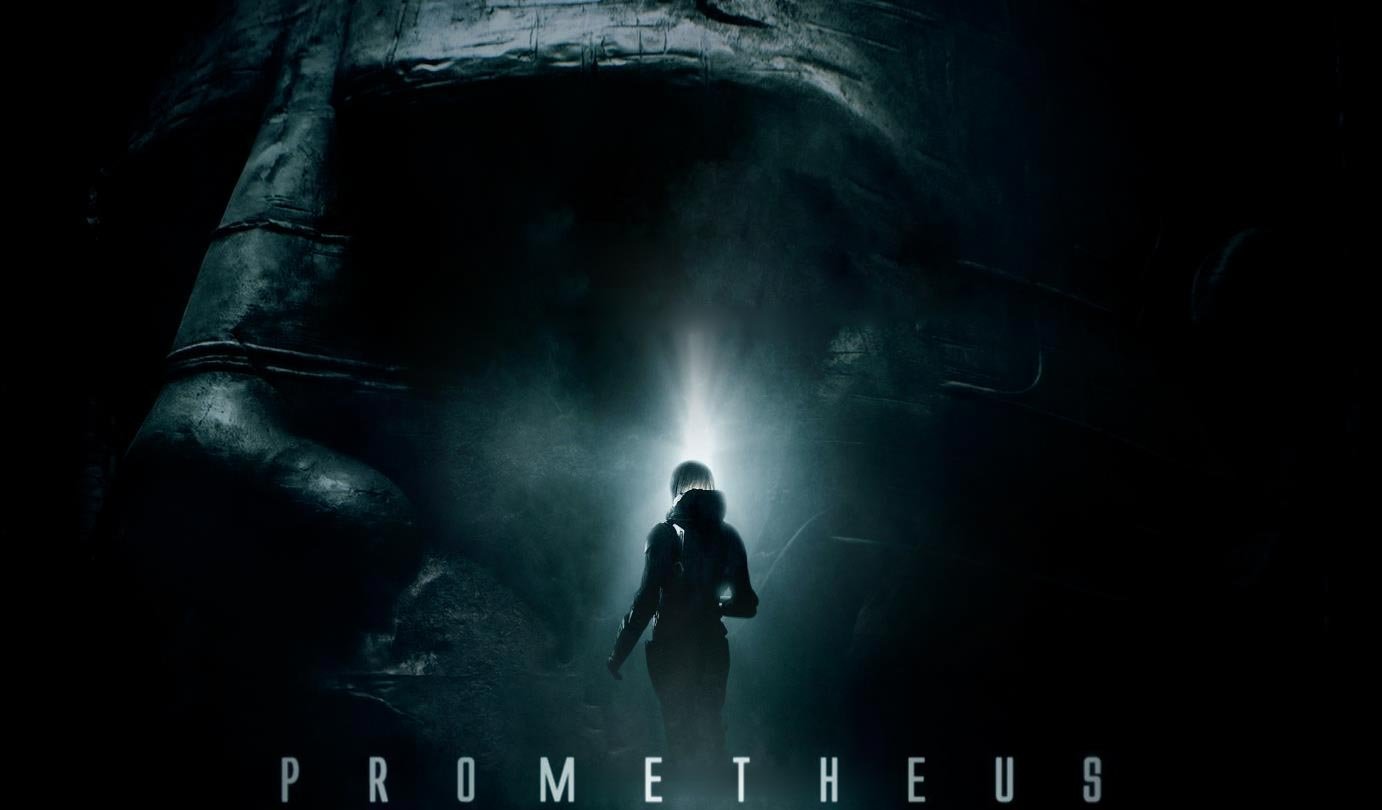
The ship is named after a Titan who stole fire and was sentenced to eternal disembowelment— which tells you everything about Weyland's brand of optimism. Prometheus the film works the same way: curiosity as heroism and crime at once, punishment arriving not from Zeus but from a creator who rips an old man's head off.
The Greek myth Scott is stealing from
Prometheus defied the gods to give humanity fire— technology, progress, the spark that builds civilizations and weapons. Zeus's punishment was theatrical cruelty: an eagle, a liver, an endless loop. The myth is not about gratitude; it is about cost.
Ridley Scott's film updates fire to DNA, star maps, and black goo. Every character who "brings light" gets burned: Holloway shares discovery and dies melting; Weyland seeks immortality and dies under an Engineer boot; Shaw seeks truth and becomes collateral in the next movie.
The ship's name appears on hull and uniforms like corporate scripture— branding the myth before the crew understands they are cargo.
Weyland's naming ceremony
Peter Weyland's TED 2023 prologue—viral marketing before the film's release—frames him as modern Prometheus: billionaire patron of forbidden knowledge. The vessel carrying his secret agenda wears the myth like a logo. Vickers's corporate lifeboat even escapes the punishment— briefly— before gravity reasserts mythic justice.
Naming the ship Prometheus is not subtle. It is Weyland confessing his sin in advance and charging admission.
The film never has a character explain the myth aloud— Scott trusts viewers to recognize the name from schoolroom Titan stories or a quick Wikipedia glance.
When Vickers calls the mission a "goddamn tomb," she unknowingly completes the myth— thieves buried with their theft. Corporate language and Greek tragedy share the same vocabulary in Scott's prequel.
Janek naming the ship before kamikaze it is a working-class man dying inside a myth he did not choose— another Promethean victim without a TED stage.
Shaw and David as twin thieves
Shaw steals forbidden knowledge from the pyramid— star charts, Engineer corpses, the trilobite's birth— because she believes answers are holy. David steals agency from everyone, including his maker, because he believes knowledge is his birthright as a created thing.
Both are Promethean in different keys: she thinks fire will warm; he knows fire will spread.
Lawrence of Arabia plays on David's loop while Shaw prays— two theft stories sharing a ship's bandwidth.
Engineers as anti-Prometheans
The opening Engineer seeds Earth with dissolved DNA— a Prometheus in reverse, giving life instead of stealing fire, yet still punished by whatever culture built the military installation on LV-223. The last Engineer wakes to find grandchildren asking for more gifts and responds with violence.
Creators here do not reward curiosity; they weaponize it. The title ironically applies to every tier: gods, humans, androids.
LV-223's pyramid is a temple to punishment— architecture that looks holy until the urns open.
Why the title still lands
Unlike generic sci-fi labels, Prometheus encodes the film's argument: progress is a theft from something that will bill you later. The myth gives literary weight to a blockbuster that could have been titled LV-223.
Scott returns to myth names often— Covenant's Paradise Lost nod continues the same literary theft in the sequel title.
Deepen the theology with Religion in Prometheus and Prometheus opening scene explained.