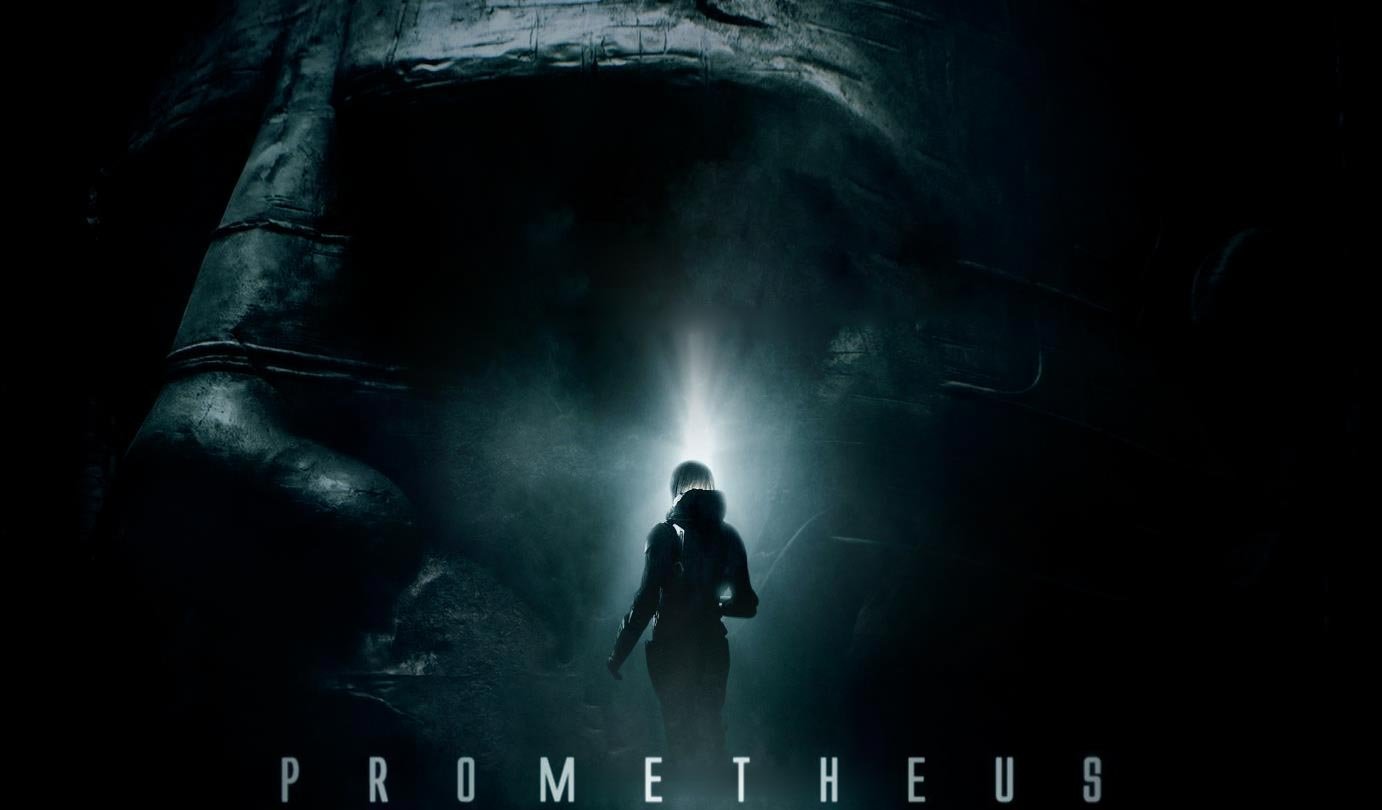
I am tired of the word “pretentious” working like a kill switch for any blockbuster that asks a question it does not fully answer. Prometheus landed in June 2012 with three jobs that do not sit still together: deliver original spectacle, stretch a franchise, and carry a philosophy-seminar mood without apologizing for the ceiling height. It did not always stick the landing. It did behave like an event in a way few studio science fiction films still permit. Big sets, big silences, big hubris. The Rotten Tomatoes split between critics and audiences was never a mystery. Some people want answers on a receipt. Others want a cathedral. The film picked a side and paid for it at the snack bar.
What still holds is craft spent where casual viewers actually feel it: weight, temperature, scale. Practical corridors and real geography on location read as expensive in the right way, not glossy demo-reel plastic. Horror only bites when the world feels breachable. If you want receipts for the commercial bet, box office trackers such as The Numbers put the worldwide total north of four hundred million dollars against a nine-figure production budget. This was not a cult curio. It was a mass-audience gamble on weird. The Wikipedia overview is a decent snapshot of facts. The lived experience is simpler. The film asks you to feel small, then punishes you for wanting to feel smart. That is a mean trick, and it is also the reason people still argue in parking lots.
Here is the take I will defend. Prometheus is at its best when it refuses to comfort the viewer with competence porn. Yes, scientists do stupid things. I do not read that as a writing error alone. I read it as part of the thesis. Humans confuse mapping with mastery, contact with consent, faith with data. If that frustrates you as unrealistic, you are asking for a different movie, one where expertise functions as plot armor and nobody’s ego costs a life. Scott’s crew is not Avatar’s best and brightest. It is a corporate expedition with sponsors, pecking order, and knives behind smiles. The unevenness is the price of that ambition. I would rather rewatch a flawed film that risks embarrassment than a polished film that risks nothing. The second kind ages into wallpaper. The first kind ages into argument.
When people ask whether it holds up, I flip the question. Compared to what? The conveyor belt of quip-heavy franchise filler? Prometheus still feels like somebody fought for tone. Love it or hate it, you remember the sound of the ship, the sting of the light, the way Michael Fassbender’s David watches humans the way a collector watches insects. That is not disposable streaming wallpaper. That is cinema that wants a big screen and a loud system, then dares you to fight on the drive home. If that is pretentious, I will take the word and wear it.
The haters often skip something basic. Prometheus trusts faces. Noomi Rapace’s exhaustion, Fassbender’s stillness, Charlize Theron’s glass-sharp control: the movie treats human reaction shots as special effects too. That is old craft, not algorithmic shot selection. When blockbuster cinema defaults to digital doubles and reshoot patchwork, performances fray. Here, even when the script thins, the cast keeps selling gravity. I would rather have a knotty film anchored by real actors in real light than a tidy screenplay executed by pixels pretending to care. Event cinema is not only scale. It is conviction. This one still has both, bruises and all.
Summer weekends have a way of flattening memory. Trailers start to look like one long shimmer. Sequels promise continuity and deliver homework. Prometheus arrived in that climate and still insisted on being a little rude about its own seriousness. It wanted awe and disgust in the same breath. It wanted you to feel the size of the temple before it showed you what the temple thinks of you. That sequencing matters. A film that shows the monster first and the myth second trains you like an arcade game. A film that shows the myth first trains you like a patient, which is a different kind of insult and a more interesting one.
The theatrical experience also mattered in a practical sense. 3D was still a studio obsession in 2012, for better and worse. Even if you saw it flat, the photography was built with depth planes in mind: foreground hazard, midground bodies, background architecture that refuses to resolve cleanly. That is not a gimmick chart. That is spatial storytelling. It changes how long a shot can live on screen before boredom sets in. The film bets that your eye wants to travel. Plenty of viewers said it was slow. Plenty of viewers were not wrong for themselves. Speed is not a universal virtue. Sometimes patience is the scare.
Sound is half of why the event reading survives. Low end under the ship, metallic tension in corridors, the wet intimacy of biology when the story turns mean. A home speaker that cannot move air makes the film feel smaller than it is. That is not the movie’s fault, but it is a real condition of how people meet blockbusters now. If you have only heard Prometheus through a laptop, you have met a photograph of the animal. The animal itself is physical. It wants your ribs involved.
The franchise context also sharpened the opening weekend. People walked in with xenomorph math in their heads. They walked out with Engineers and black goo and a dozen new questions. Some felt cheated. Some felt fed. The film’s refusal to behave like a clean prequel is exactly what makes it linger. Clean prequels explain themselves into irrelevance. Messy ones leave splinters. Splinters are annoying. They are also proof you touched wood.
I am not asking you to forgive every choice. There are lines that clunk and beats that wobble. There are characters who exist to be wrong in public. There is a version of this essay that treats those flaws as fatal. I do not live in that version. I live in the one where blockbuster filmmaking is so often engineered to offend nobody that offense becomes a kind of praise. Prometheus offends on purpose. It prefers a groan in the audience to a shrug. A groan means you are still participating.
There is also the matter of money on screen versus money as marketing. You can feel when a budget went to texture instead of trailer moments. Stone reads like stone. Metal reads like metal. Suits read heavy. Those choices accumulate into a world you believe you could trip in. When the world breaks, the break hurts more because the baseline was believable. That is how you get an event feeling without a constant fireworks show. The film saves its explosions for when the story has earned panic.
If you teach film or you just like talking in bars, Prometheus is useful for one other reason. It separates viewers who want movies to confirm their intelligence from viewers who want movies to test it. The first group hates ambiguity. The second group pays for it. This movie is a litmus test in IMAX clothing. I am not saying the second group is smarter. I am saying they signed up for a different contract. The contract is written in dust and starlight and corporate hubris, and it does not offer a money-back guarantee.
One more piece of the event puzzle is embarrassment risk. Prometheus says lines out loud that cooler movies would smuggle in as subtext. It shows you murals and star maps and asks you to care before it pays off every curiosity. That is a fragile social contract in a theater full of strangers. It can land as profundity. It can land as camp. The interesting part is that the film accepts both outcomes. It is not trying to be liked by everyone in the room. It is trying to be large. Large is a different goal than likable, and studios usually treat them as the same button. Here, somebody kept the buttons separate long enough to ship a movie that still reads as a night out, not a content module. That distinction is fading. Catch it while you can.
So I will close where I started, but with the volume turned up. Prometheus is not a perfect film. It is a memorable one. It still feels like somebody spent real currency on atmosphere and then dared you to complain about the bill. Thirteen years later, people still post essays, still fight in replies, still rewatch with new grudges. That is not failure. That is the afterlife of an event. The weekend ends. The cathedral stays standing. Some people worship. Some people throw rocks. The building does not care. That indifference is oddly on theme.