← Back Anchal K.
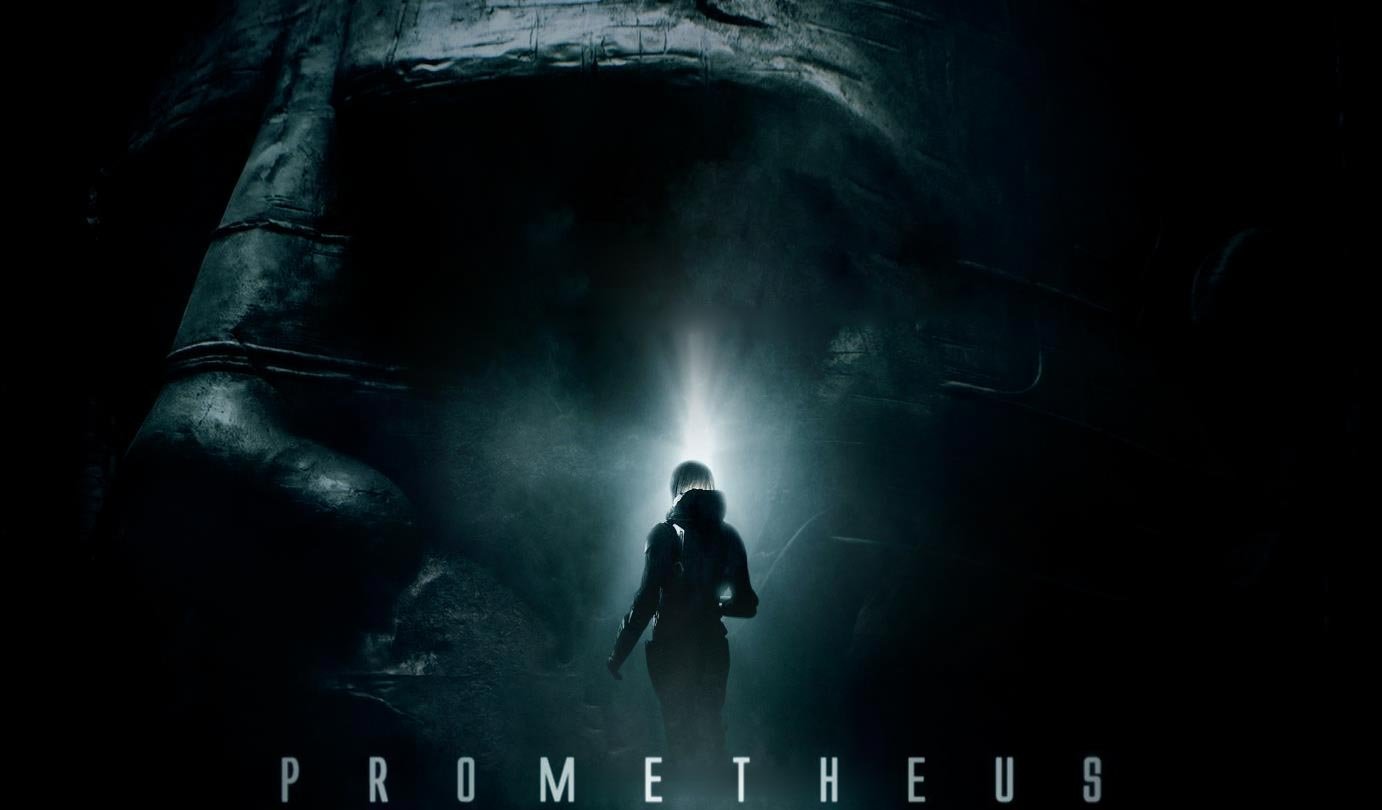
Prometheus (2012) — DNA shared, invoice not included. Ridley Scott’s prequel widens the biomechanical myth with mural whispers, Deacon birth, and black goo accelerant rather than a labeled xenomorph origin scroll.
Giger’s shadow on LV-223
From the Juggernaut’s pilot chair to the mural chamber’s fresco, Prometheus wears H.R. Giger’s biomechanical aesthetic like inherited armor. Skulls, tubes, and elongated craniums echo the 1979 xenomorph without placing a dormant egg on a conveyor belt for Ripley to find later.
The Deacon’s birth is the clearest on-screen cousin: elongated head, dual jaws implied in design language, body horror born from Engineer flesh. It is not the Nostromo creature, but you feel the family resemblance in the sound design and the way the camera refuses to glamorize the reveal.
What the walls claim
The mural chamber presents an Engineer head centerpiece and surrounding figures that fans have parsed for decades—some see a xenomorph curled in worship posture, others see ambiguous biomech scripture. Scott has encouraged multiple readings while denying a simple “Engineers built xenomorphs on Tuesday” timeline.
That ambiguity is strategic. Prometheus argues that creation myths are painted by survivors, not lab notebooks. The mural is testimony, not documentation. Mural chamber explained walks the iconography beat by beat.
Black goo and emergent monsters
The black fluid behaves less like a single species generator and more like a catalyst—rewriting worms into hammerpedes, Holloway into infection vector, Shaw into trilobite host. Xenomorph connection here is procedural: given Engineer biotech plus human contact, familiar horror shapes emerge.
Janek’s Earth-weapon theory frames the cargo as intentional genocide infrastructure. If the Engineers seeded life and also stockpiled outcomes that resemble xenomorphs, the franchise’s devil ceases to be random cosmic pest and becomes theological punishment. Black goo explained details the catalyst logic.
Why Scott refused a birth certificate
A prequel that printed “here is the xenomorph” would shrink Alien’s unknown into homework. Scott instead expands the pantheon—Engineers, goo, David’s later notebooks in Covenant—so Ripley’s nightmare stays personal even when cosmology grows.
Fans debating whether Prometheus “counts” as xenomorph canon are really debating whether mystery requires silence. The film’s answer is partial revelation: enough rhyme to honor Giger, enough gap to keep arguing on rewatch. Production interviews from 2012 repeatedly stressed “DNA” and “roots” rather than “origin,” which matches what the theatrical cut actually shows.
Close read on rewatch
Line up the opening Engineer sacrifice, the mural, the trilobite, and the Deacon. You get a creation triangle—seed, worship, violation, birth—each stage biomechanical. That is the xenomorph connection Scott cares about: not a supply chain, but a theology of flesh.
Even the Deacon’s head shape reads as unfinished xenomorph—more bone, less chitin—suggesting lineage still in flux on LV-223 rather than a final form shipped to LV-426.
Pair this guide with Deacon explained, Is Prometheus a prequel?, and facehugger origin in Prometheus for the full cousin map.