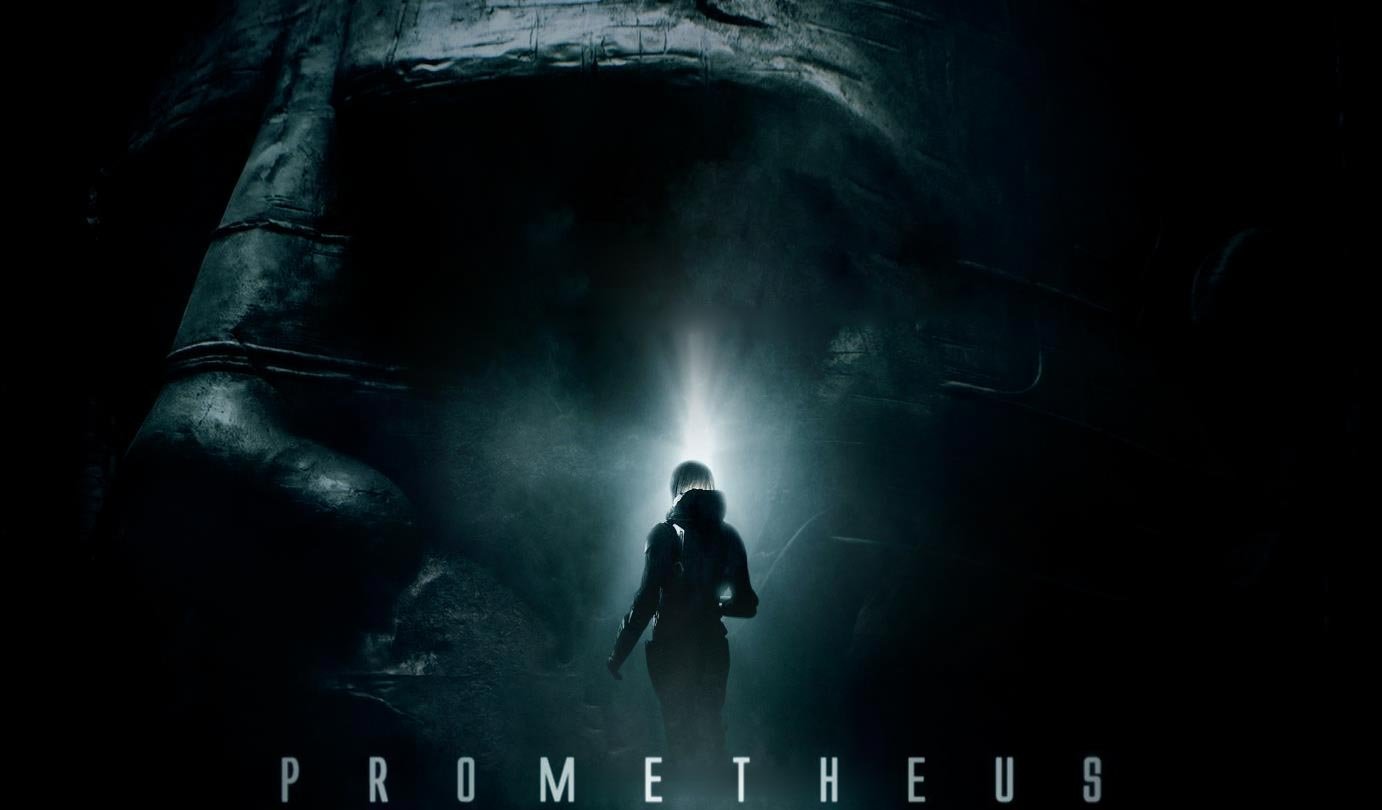
Casting is fate. Prometheus hit the jackpot with Michael Fassbender’s David: polite, curious, quietly proprietary. An android who steals scenes without raising his voice. Noomi Rapace’s Shaw anchors the film’s bruised faith: smart enough to be dangerous, stubborn enough to survive ideas that should kill her. Charlize Theron’s Vickers is corporate frost done without camp. Idris Elba’s Janek supplies warmth and pragmatism so the ship feels inhabited by adults, not exposition bots. Guy Pearce under latex as Weyland sells entitlement as theology. The roster is on IMDb fullcredits for skeptics who think I am hand-waving. Click in, then argue with the screen. The screen can take it.
The controversial performance read is Logan Marshall-Green’s Holloway, often dismissed as arrogant scientist number four. I think that is shallow viewing. Holloway exists to collide with Shaw’s faith-shaped reasoning. His skepticism and swagger are thematic ballast, not likeability contests. Movies have convinced audiences every protagonist must be charming. Ensemble science fiction used to let people be prickly because prickly gets you killed in unknown environments. The film punishes appetite for certainty. His included. Punishment is not proof of bad acting. It is proof of role function.
Fassbender’s micro-calibration matters because the script asks the android to watch humans like specimens. A hammier actor would wink. Fassbender withholds. That choice single-handedly elevates mid-tier dialogue into menace. When people say he carried the film, they are not exaggerating. They are correctly identifying the magnetic center around which the philosophical debris orbits. Orbits need gravity. David provides gravity while pretending to serve coffee.
Rapace gets the harder sell: earnestness in a cynical genre. Shaw could collapse into parody. Rapace plays pain and conviction as intertwined. You may not share her beliefs, but you believe she believes, which is the only contract the film needs for its final movements to land. Without that sincerity, the Engineers’ indifference would play as abstract nastiness instead of personal betrayal. Betrayal needs a person to betray, not an idea alone.
Ensemble fairness check: not everyone gets a satisfying arc. Blame the mythic sprawl. Still, faces are memorable, voices distinct, body language legible at a glance. In modern green-screen soup, that clarity is a casting and direction win worth defending even when the screenplay stumbles. Stumbles in script do not erase wins in faces. Faces are what people screenshot in their memory.
Supporting players, Rafe Spall, Sean Harris, Kate Dickie, Benedict Wong, etch flavor fast because the film cannot pause for everyone’s novella. Bit roles in lesser movies read as expendable. Here they read as competent specialists who wandered into a myth too large for their job titles. That economy matters. When cannon fodder feels anonymous, horror feels cheap. When it feels like coworkers, loss lands. Not every death is Shakespeare, but the casting office did its job.
Line-reading purists miss that blockbuster acting is often about carrying exposition without looking like you are reading a PDF. This cast mostly clears that bar, even when the PDF is clunky. That is skill, not luck. Save your venom for movies where stars visibly forget why they are in frame. This is not that set. That set had Ridley Scott and a budget that bought time for takes.
Theron’s Vickers is a masterclass in stillness as threat. She does not need a speech every scene. Her spine does the talking. That kind of performance is easy to call cold. Cold is the assignment. Corporate power in this universe is not cuddly. If Vickers were warm, the film would lie about what companies do to missions like this one. The lie would feel nice. Nice would be wrong.
Elba’s Janek is the audience’s folk sanity anchor. He loves his ship, distrusts the mission’s ego layer, and chooses decency in a story that punishes decency sometimes. That arc is small but essential. Without Janek, the film becomes only priests and CEOs arguing in space. Janek reminds you that labor exists, that competence can be humble, that jokes are a survival tool. Survival tools belong in ensemble casts. They keep myth from floating away entirely.
Pearce’s Weyland is grotesque in the correct direction: wealth as rot, curiosity as appetite, faith as purchase order. The makeup choice reads divisive. Divisive is not automatically failure. It forces you to confront how money tries to outlive biology. Biology laughs. The performance sells the laugh as tragedy for the man and comedy for the universe. That split is hard to play. Pearce plays it without asking you to love him. Love is not owed to billionaires, even in fiction.
Belief as a character flaw runs through Shaw and Holloway as a marriage of opposites. Belief without caution, skepticism without humility: both are flaws here, not only one. The film is mean enough to suggest humans fail symmetrically. Symmetrical failure is more interesting than a clean hero. Clean heroes belong in commercials. This is a movie where commercials would be a lie.
Performance also has to survive helmets, chaos, and ADR realities. Some lines will always sound stitched. Stitched lines are industry normal. What matters is whether the face sells the stitch. Faces sell more often than not here. That is cast quality plus direction plus patience. Patience is a production resource. This production spent it on actors who could hold a frame.
If you teach acting for camera, use David’s close work as a lesson in intention without movement. Intention without movement is harder than twitchy business. Twitchy business hides fear. Stillness exposes it. Exposure is what the film wants from the android watching humans pretend they are in charge. Humans are not in charge. The face tells you early if you listen with your eyes.
So belief is a flaw, ego is fuel, and the android empties the room without raising his voice. That sentence is the film in casting terms. Casting is not only names on a poster. It is physics: who pulls the frame, who recedes, who reads as food for the idea. This roster reads as food for ideas, even when the ideas wobble. Wobble in theme still needs human faces to hurt. These faces hurt on purpose. Purpose is praise.
Another casting layer people under-discuss: accents and vocal texture sell internationalism without turning characters into flags. Flags are for lazy exposition. Texture is for lived-in crews. Lived-in crews make deaths cost more because the ship feels like a workplace that hired globally, not like a casting spreadsheet checking boxes. Box-checking reads hollow. Hollow reads cheap. Prometheus mostly avoids hollow internationalism by letting people behave like specialists instead of tourism ads.
Gender and performance intersect too. Shaw’s endurance is not a superpower. It is played as cost. Cost shows in Rapace’s body and voice. Theron’s control is played as armor. Armor cracks in small tells. Small tells are harder than monologues. Monologues explain. Tells accuse. The film wants accusation without speech sometimes. Speech arrives later, when the story forces it.
Holloway’s arrogance also sets up thematic contrast with Janek’s grounded humor. The script needs both poles so the film does not become only solemn priests in space. Solemnity without contrast becomes parody. Janek’s performances provide oxygen. Oxygen lets the heavier scenes land harder because you were allowed to breathe once or twice. Breathing is pacing. Pacing is performance too.
David’s politeness is a performance inside a performance. Fassbender signals the double layer without winking. Winking would break the myth. The myth needs you to believe humans can mistake servility for safety. Safety is the cruelest joke in the film. Jokes that land in the gut require an actor who can smile without warmth. Cold smiles are easy to do badly. Here they read as intelligent, which is worse for the humans on screen.
Finally, remember that blockbuster ensembles are also logistics puzzles: schedules, star contracts, screen time fights. What you see is a compromise artifact like everything else in studio film. The miracle is how often the performances hide the compromise. Hidden compromise is craft. Visible compromise is a distracted actor. Distraction is rare here. Rare is worth naming. Naming it is how you thank the cast without sounding like a press release. No press release would admit this much honesty. Honesty belongs in essays.
If you finish this article and rewatch only one performance, pick a scene where someone is wrong out loud. Wrong-out-loud scenes are where casting pays rent. Rent is due every time a blockbuster pretends smart people never err. Smart people err constantly. This cast errs believably. Believable error is the secret engine under the myth. Myth without error is propaganda. The film is meaner than propaganda, thank God.