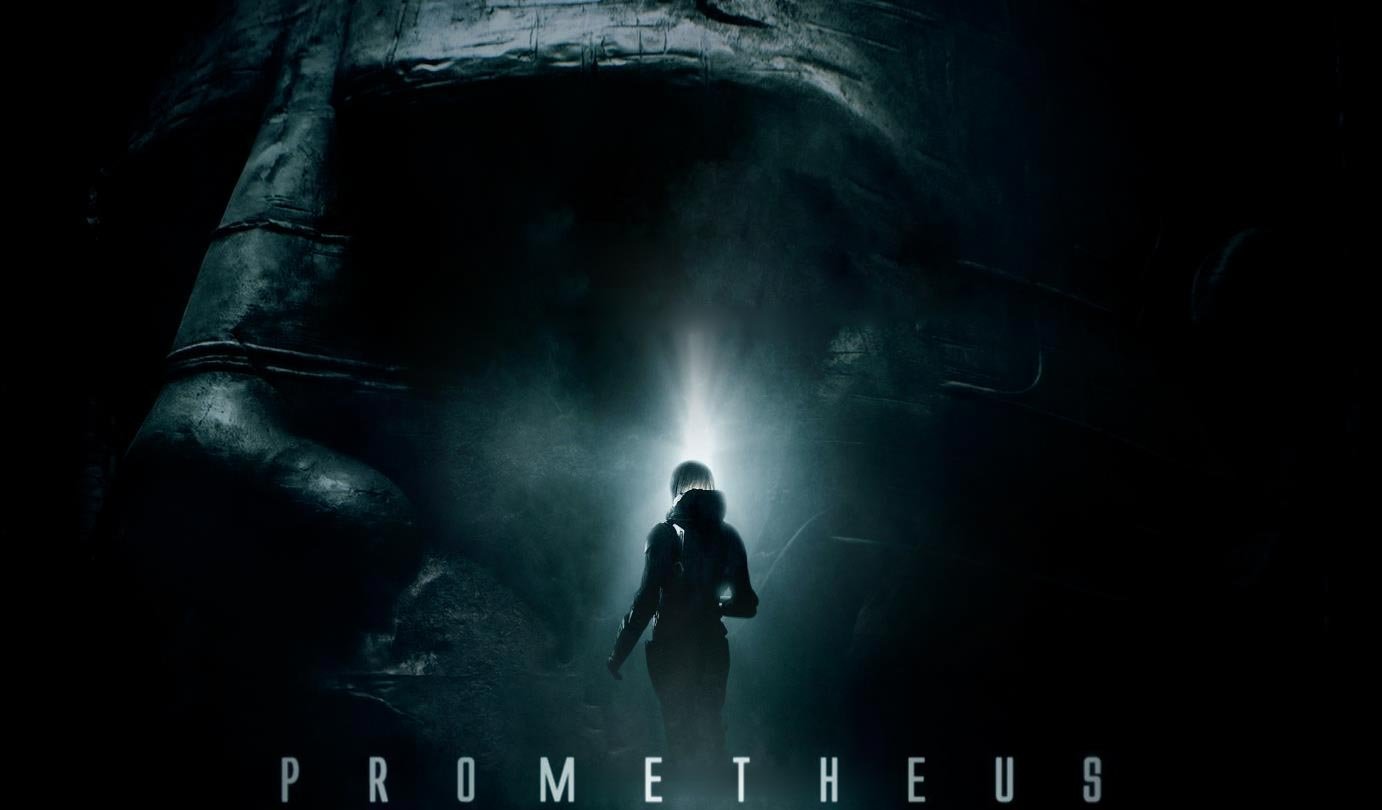
Marc Streitenfeld’s Prometheus score begins where too many horror scores end: wide, airy, almost devotional. Then it rots the harmony out from under you. That is the correct moral accompaniment for a film about meeting gods who do not love you back. The soundtrack’s Wikipedia page notes the Abbey Road orchestral sessions and the infamous trick of having musicians read reversed sheets so reversed playback lands forward. A stunt that sounds gimmicky until you hear how uncanny the result feels. Streitenfeld’s own site (marcstreitenfeld.com) situates him in the Scott orbit. This was not a random hire. It was a continued conversation between director and composer about restraint versus surge. Surge without restraint is trailer music. Restraint without surge is wallpaper. The film wants the knife between them.
The score’s best habit is knowing when to shut up. Modern blockbusters fear silence. This one lets sound design breathe: suits, air handlers, footsteps. So when strings creep in, you notice. Dynamic range became a punchline in compressed streaming audio, which is a shame. This film’s quiet corridors are half the scare. Streitenfeld writes space, not just melody. Space is where dread rehearses before it performs.
“Friend from the Past” nods to Jerry Goldsmith’s Alien territory, which could have been cheap fan service. Instead it reads as lineage acknowledged without surrendering the new film’s sonic identity: more haunting echo than cover band. Franchise music often handcuffs composers to leitmotifs until every scene sounds like a trailer. Here the reference is pointed, then folded away. Folded away is adult franchise craft. Lingering reference is cosplay.
If you dislike the score, you probably dislike the movie’s pace. Fair. But blaming Streitenfeld for not being Zimmer misses the assignment. Zimmer thunder would collapse the film’s eerie reverence into trailer soup. The assignment was wonder that sours, not adrenaline that flatters. On that brief, the music succeeds even when the plot wobbles. Wobble in plot does not mean failure in score. Different departments, different responsibilities.
Headphone recommendation: listen for the handoff between orchestral swell and metallic squeal, where music yields to machine. That transition is the film in miniature: humans bring hymns. The universe answers with torque. You do not need a theory thread to feel it. You need decent cans and a willingness to let the mix do its job. The mix is not subtle because it is shy. It is subtle because it is cruel.
Supplemental cues by Harry Gregson-Williams, documented alongside Streitenfeld on the same soundtrack overview, hint at how modern scores get assembled in layers: multiple hands, tight deadlines, director notes at 2 a.m. Even with that industrial reality, the album arc holds together as one mood: cathedral, corridor, catastrophe. Try it on a walk. Notice how your pace slows, then tightens when percussion sneaks in. Good genre scoring hacks your nervous system without asking permission.
If you only remember one cue, remember the feeling of uplift curdling: major becoming minor, consonance picking up grit. That is the film’s entire philosophical pitch translated into pitch-bend. Cheap scores telegraph jumps. This one telegraphs doubt. Doubt lasts longer. Longer doubt is better for a film that wants you uncertain about creators, parents, and CEOs who think they are both.
Streitenfeld’s Scott collaborations share a family trait: music that behaves like institutional calm until it does not. That trait fits Prometheus because the story is about institutions of faith and capital marching into a temple that outranks them. The score can sound like polite procession music right before it becomes a warning. Warnings that sound polite are scarier than horns that announce doom. Doom announcements let you prepare. Polite warnings arrive while you are still adjusting your mask.
Texture matters too. Reversed-session tricks produce intervals that feel almost familiar but not quite, like a language you mislearned. That almost-familiarity matches the film’s visuals: recognizable biomechanical rhymes that refuse to become a catalog. Sonically, the score refuses to become a theme park medley. It keeps slipping sideways. Sideways is unnerving. Straight ahead is comforting. Comfort is not on the menu.
Rhythmically, the score often avoids dance-friendly pulses. Lack of pulse is a choice. Pulse tells the body it knows what comes next. This film wants the body uncertain. Uncertain bodies sit forward in the chair. Forward sitting is engagement. Engagement is what summer movies pretend they want while they feed you predictability. Predictability is safe for stock prices. It is death for horror.
The Abbey Road detail is not trivia. It is a statement about scale. Orchestral recording at that level buys timbre you cannot fake with a single laptop library. Timbre is the hidden text beneath melody. When timbre is rich, awe feels expensive. When timbre is thin, awe feels like a screensaver. Prometheus wants expensive awe before it rots. Rotting expensive things is meaner than rotting cheap ones.
If you teach film music, use the score as a lesson in patience and payoff. Patience is not silence alone. It is sparse material repeated until it becomes environment. Payoff is not volume alone. It is harmonic change that recontextualizes what you already heard. Recontextualization mirrors the plot: humans recontextualize their mission as they learn the temple is not a welcome mat.
Streaming compression note: scores suffer first. Strings become mush. Low brass becomes mud. If you care, find a high-quality audio track and listen loud enough to feel uncomfortable, then back off one notch. That notch is often where the score breathes. Breathing scores make horror feel adult. Suffocating scores make horror feel like a panic button.
Finally, wonder that curdles is not cynicism. It is realism in a mythic suit. The universe in this film is not your friend. Music that pretends otherwise would lie. Streitenfeld’s score tells the truth slowly, then refuses to take it back. Refusal is the right ending note for a movie that ends with questions and pursuit. Pursuit needs a score that can run without promising safety. Safety was never the product. The product was awe with teeth. The teeth show up in the harmony if you listen closely enough.
So buy the album or stream it in the highest bitrate you can stand. Walk through a city at night while “life signs” fake you out and strings pretend to be holy. Then let the metallic world intrude. Intrusion is the lesson. Music can be a door. Music can be a warning label on the same door. Prometheus chooses both. Listen twice. The second listen is meaner, which is correct.
Another angle people skip: the score has to coexist with Marc’s own habits from earlier Scott films and with audience expectations shaped by a decade of BRAAAM trailers. Surviving that expectation stack without becoming a parody is harder than it sounds. Streitenfeld chooses unease over bragging. Unease ages better. Bragging dates to its release quarter. If you feel the score is “small,” you might be measuring it with the wrong ruler. Smallness here is claustrophobia, not a lack of ideas.
Also consider how the music treats Shaw’s faith. It does not mock her with cartoon choirs. It often gives her sincerity space, then lets the world answer with a colder texture. That dynamic is more respectful than snark. Snark would turn her into a punchline. The score keeps her human while the narrative tests her beliefs. Testing beliefs through orchestration is old Hollywood craft when it works. It works often enough here to matter.
David’s presence on screen changes the sonic read too. When the android is central, the score can thin out, as if the room is listening through him. That is not always explicit in the writing credits. It is something you feel when you compare scenes with and without him. The music behaves like an intelligence that does not share human warmth. Cold intelligence is harder to score than monster stings. Monsters give you a formula. David gives you a stare.
For franchise comparison, Goldsmith’s Alien score is claustrophobic and industrial in a different register. Prometheus opens the roof and lets choir-adjacent air in, then contaminates the air. Contamination is a narrative move the score performs in parallel with the plot. Parallel storytelling through music is why film scores matter. If you only notice music when it swells, you are missing half the direction.
Bottom line: Streitenfeld’s work is not trying to win a popularity contest on Spotify. It is trying to survive inside Ridley Scott’s picture without turning the picture into a music video. Survival means retreating when the ship groans, advancing when the humans need false comfort, and curdling when the truth arrives. That is a full arc. Arcs belong in scores as much as in scripts. This score has one. Follow it from cathedral to corridor to catastrophe and you will hear the same story your eyes are telling, just translated into air pressure and vibrating strings.