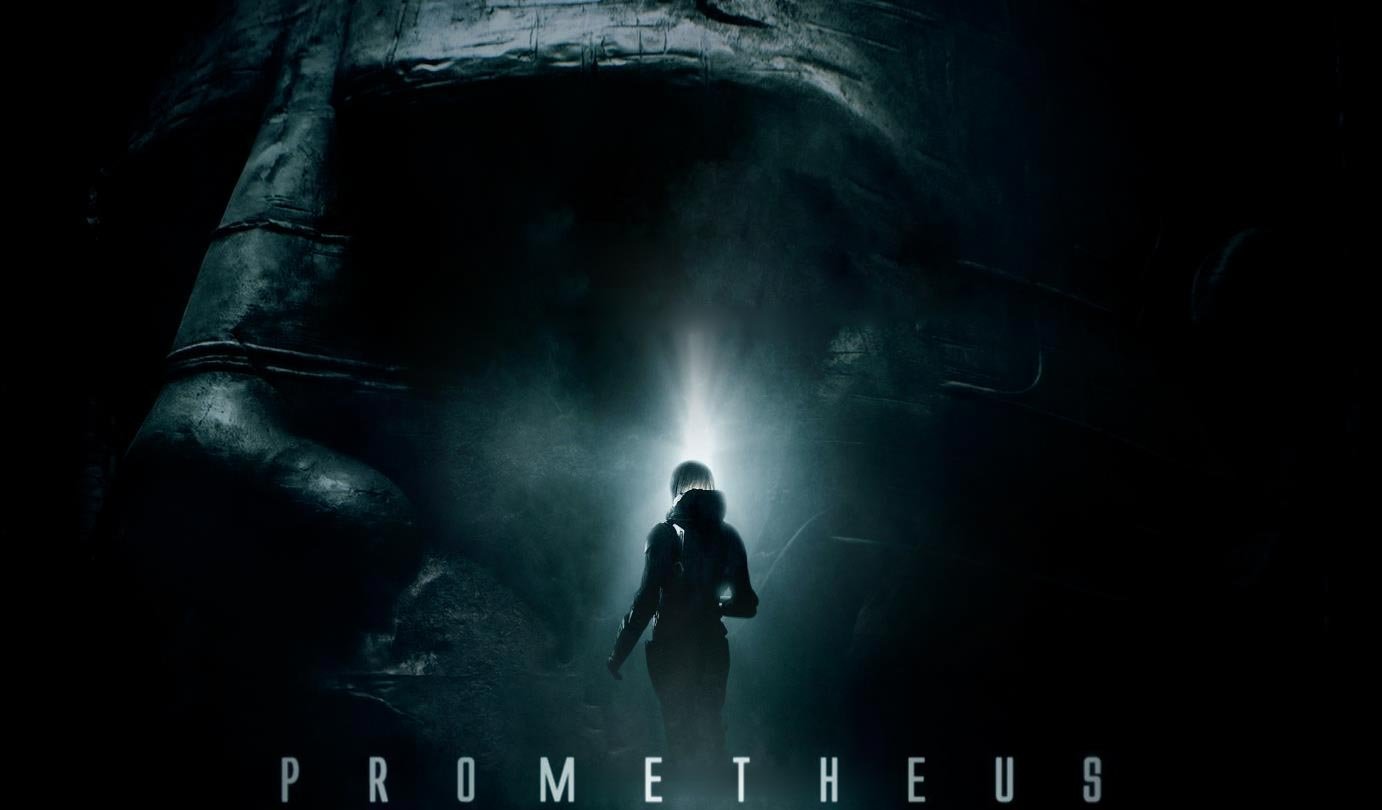
Ridley Scott’s return to big-budget science fiction in 2012 was never going to be a shy reintroduction. By then his reputation was split: the meticulous world-builder of Blade Runner and Alien, and the restless commercial craftsman who would happily chase scale. Prometheus sits in the tension. It is patient when fans want velocity. It is operatic when cynics want grounded minimalism. I call that a feature, not a bug you patch with faster cutting. The IMDb credits page is a useful reminder of how many departments had to align. This is not a director sketch. It is industrial filmmaking with a point of view, and the point of view shows up in how rooms are entered, how power lines up in a frame, and how long the camera stays polite before it stops being polite.
Scott’s procedural instinct is the secret sauce. Briefings, maps, drones, monitors: the film teaches you the operation before it breaks the operation. That is classic Scott. Horror emerges from systems, not from a monster popping out on schedule. When the crew fractures, it fractures like a workplace: class, employer leverage, expertise used as a weapon. The scare is biological, sure, but the pressure is organizational. That is adult blockbuster filmmaking, even when the dialogue thins out. Thin dialogue in a Ridley Scott film is often a bet that you will read the room. If you refuse, you will call the film empty. If you accept, you will call it controlled. Both viewers saw the same pixels.
The knock on Scott, especially in online discourse, is “pretty emptiness.” I think that is half-right and wrongly aimed. There are stretches where ideas float instead of land. There are also sequences where the camera’s patience does work dialogue refuses to do. Landscapes breathe. Dread accumulates. Vanity reads on faces without exposition. If you grew up on faster cutting, you may read that as vagueness. If you like slow cinema’s cousin inside studio genre, you read it as confidence. Either way, it is consistent authorship, not accident. Accidental films do not hold identical tonal grudges from act one to act three.
Where I will concede ground: ensemble management in myth-heavy scripts is brutal. Not every character gets a satisfying arc. Some exist to be wrong in public. Scott still stages them clearly: who stands where, who watches whom, so power dynamics remain legible even when motivations wobble. For a film about humans demanding answers from gods, it is fitting that the direction is steadier than the humans deserve. Scott is the calm engineer at the panel while the crew yells at the storm. That contrast is not accidental modesty. It is directorial judgment about who is adult in the room.
Compare his blocking here to the jittery coverage that infects streaming genre shows. Scott still trusts a wide shot to carry story. Wides are expensive in screen time. They force production design and performance to cohere. Tight coverage is a cheat code for weak environments. Prometheus spends its wides on temples and valleys because those images are the thesis: humans dwarfed by intent they misread. A faster director would chop those moments into trailer-friendly sizzle. Scott lets them breathe until discomfort sets in. That decision alone dates the film to an era when studios still believed adults bought tickets in summer. Whether that belief was naive is a business question. Whether the filmmaking respects the belief is an artistic one.
Final gripe at the “pretty emptiness” crowd: emptiness is sometimes composition. Negative space is where dread parks. Fill every frame with chatter and lore, you get television. Scott still makes movies: uncomfortable, uneven, occasionally glorious movies. The glory is not evenly distributed. Neither is life. The film’s uneven glory matches its subject. Gods do not distribute awe on a schedule. Why should the director?
Late-career voice also means repetition with variation. Scott returns to motifs: corporate masks, bodies as cargo, civilization as a thin skin over appetite. If you know his filmography, you can predict the weather. That predictability does not cancel the storm. Prometheus applies the old motifs to creation mythology instead of pure survival. The shift changes the lighting. The bones stay familiar. Familiar bones can still break in new places.
Performance direction matters more here than in a pure action vehicle because the film asks faces to carry abstract stakes. When someone speaks about meeting a maker, the line can die. Scott’s blocking often saves it by showing who needs the answer and who is already bored by human need. Boredom in an android face is a Ridley Scott specialty. It is also thematic fuel. The direction and the concept shake hands where the script sometimes stumbles.
There is also the matter of scale shift inside scenes. Scott moves from intimate close work to geological grandeur without warning. Some viewers call that tonal whiplash. I call it genre honesty. Science fiction that never changes scale is lying about the universe. The universe is indifferent at every zoom level. Scott’s camera mimics that indifference by refusing to comfort you with a steady human-sized frame. You get a helmet interior, then a cliff, then a hall built for beings who do not share your proportions. The mismatch is the point.
If you are looking for a unified theory of Ridley Scott in the 2010s, Prometheus is a useful data point because it is where his patience fought his blockbuster obligations most openly. Sometimes patience won. Sometimes obligation won. The fight is visible. Visible fights are more instructive than invisible polish. Polish is for appliances. Art is for friction.
Critics who want “tighter” often mean “more explained.” Scott frequently chooses less explained and trusts materials. Metal, stone, skin, fabric: the tactility argues for him when dialogue overreaches. That is not anti-intellectual. It is cinematic intelligence that refuses to pretend words are the only thoughts movies think. If you need every idea spoken, read a novel. If you can let a corridor think, stay here.
The late-career label can sound like a slight. I mean it as geography. Scott had nothing left to prove in 2012 except whether he could still make big science fiction feel like a director’s film rather than a brand module. Prometheus is uneven proof, but it is proof. The wide shots alone testify. Somebody with power protected moments that do not advance plot efficiently. They advance mood, and mood is what survives plot once you know the story.
So yes, vague to some, controlled to others. The film does not care which camp you are in. Scott’s camera behaves like a machine that measures both camps and keeps rolling. That steadiness is the closest thing to a moral stance a blockbuster director can take without writing a manifesto. The manifesto is in the milliseconds between cuts. Count them if you want. Better yet, feel them.
Another Scott habit that shows up here is the crisp authority figure versus the messy specialist. Vickers moves like policy. Shaw moves like appetite for meaning. Janek moves like a sailor who knows the sea does not care about your thesis. Scott lines those types up in frames the way a good manager lines up personalities in a meeting, except the meeting is on an alien moon and the conference table is a tomb. The clarity of those social positions buys the film time when the myth gets thick. You always know who represents what, even when you do not know why the Engineers changed their minds about Earth.
People also underestimate how much Scott’s action grammar owes to physical consequence. When bodies run, they tire. When vehicles move, they obey inertia until chaos breaks the rules. That is not realism for its own sake. It is tonal discipline. A universe that punishes carelessness should feel heavy before it feels fast. Heavy does not mean slow motion every five minutes. It means weight in the cut, weight in the sound, weight in how actors pivot inside suits. The direction supports that contract even when the script asks characters to behave like plot devices. Scott cannot fix every line. He can still make the floor feel real under the line.
If you stack Prometheus beside other franchise films from the same decade, Scott’s voice shows up as refusal: refusal to chatter over every image, refusal to treat awe like a throwaway beat, refusal to let the camera behave like a nervous intern. Those refusals cost him with viewers who want constant forward motion. They reward him with viewers who want cinema to act like cinema. I am in the second group. I will take the uneven cathedral over the even warehouse. Warehouses store boxes. Cathedrals store doubt. Doubt is the better fuel for science fiction that hopes to last beyond its opening weekend receipts.