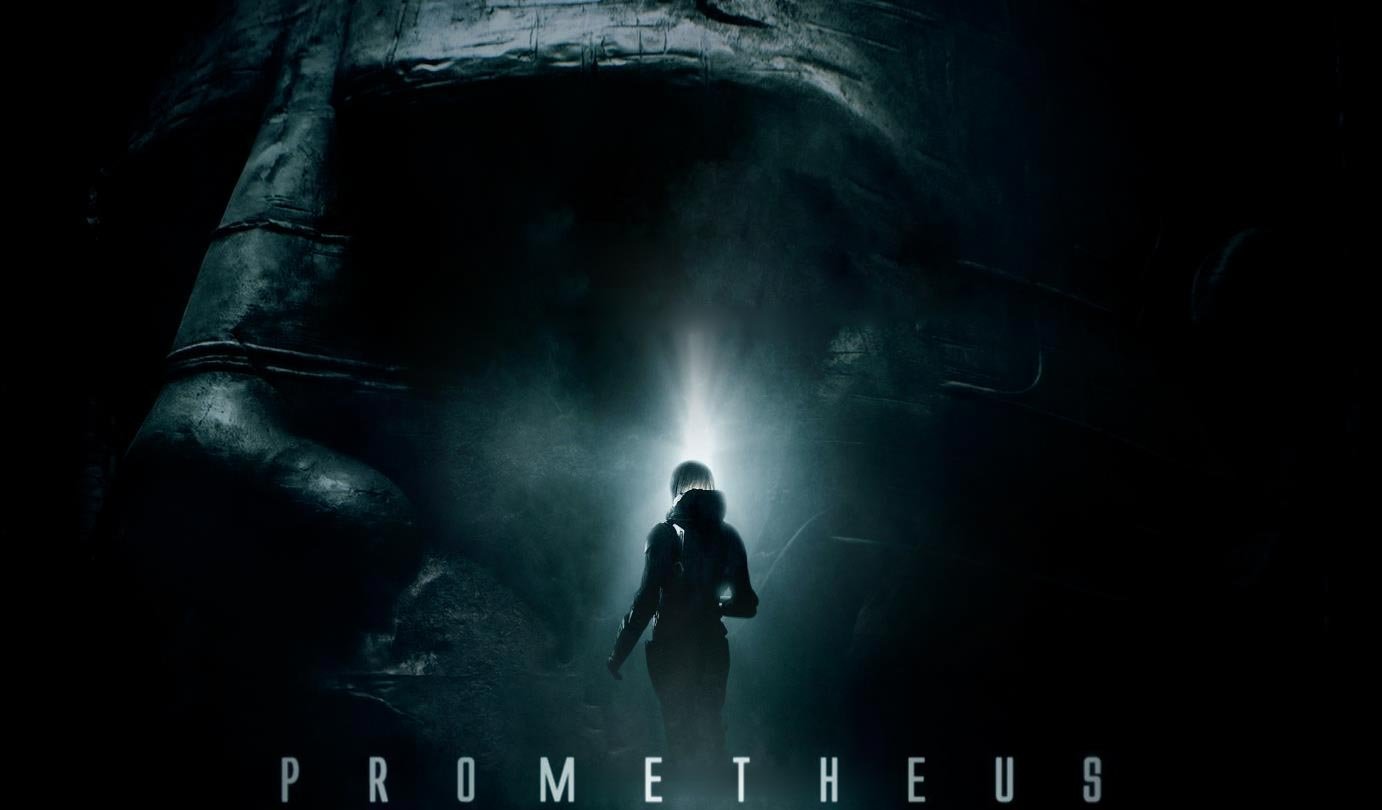
Throwing money at the screen is easy. Making money look like weight is not. Prometheus succeeds where so many digital spectacles fail because it keeps bodies in real space: wind, dust, distance, metal that clangs. The research vessel reads like a workplace: modular, slightly ugly, branded without looking like a showroom. That is intentional anti-glamour. When the story later violates the ship’s sanctity, you feel it because the baseline was believable. Production breakdowns in the trades and on Wikipedia’s production section sketch the scale: Iceland locations, enormous sets, the industrial logistics of pretending humanity can commute to cosmology. The proof is on screen in how actors move through thresholds instead of floating across green voids.
LV-223’s exteriors are the film’s best argument for location-first blockbuster filmmaking. Temple approaches work because legs look tired and suits look heavy. Extensions widen the impossible, but the anchor is human scale. I will die on this hill. If your science fiction planet looks like a screensaver, nobody sweats. Scott wants sweat. The interiors push ceremonial geometry: chambers that behave like organs of a machine-god. The aesthetic is worship meets weapons lab, which is on-theme for Engineers who treat creation like QA testing. You are not meant to cozy up to the decor. You are meant to feel outranked by it.
Color discipline supports the turn from wonder to rot. Early ship norms train your eye. Later intrusions of organic sheen and sick amber read as corruption without a narrator explaining slime. This is old-school visual storytelling: palette as punctuation. Contemporary franchise cinema often fears silence and subtlety. Prometheus still lets rooms be rooms before they become meat. That patience is a budget decision as much as an artistic one. Someone paid for sets that could carry a scene without a creature in frame. That is increasingly rare when executives believe only monsters move tickets.
Critics who dismiss the film as style over substance are half-blind. The style is substance: indifferent architecture, corporate corridors, ritual spaces that imply ideology without a pamphlet. If you want a tidy thematic essay, read a book. If you want cinema, notice how often the frame withholds the full chamber until your curiosity does the walking. That is not empty spectacle. It is controlled revelation, the same game the characters play, except the movie is smarter than most of them. Smarter does not mean kinder. The film enjoys watching humans misread grandeur as invitation.
Budget brag rights mean nothing if texture dies. Here, texture survived release, compression, and a decade of hotter formats. That longevity is the real ROI: proof that practical bones and disciplined digital muscle beat “more pixels” every time. The film spent its money where rewatchers look: corners, joins, surfaces, the stuff casual viewers feel without naming it. Naming is for critics. Feeling is for everyone else.
I will needle the VFX evangelists: digital set extension is a servant here, not a king. When it pushes mountains higher or skies stranger, the plate still reads as photography of actors who walked there. That hierarchy, plate first, paint second, keeps the blockbuster honest. Films that invert the order look like video games within a decade. Prometheus still photographs like a location shoot that happened to discover hell. Money well burned, as far as I am concerned. Burn money on stone, not on glow.
Tourism sidebar: Iceland shoots are not just pretty postcards. They force performances into real cold and wind, which shows in how people move and speak. You cannot buy that with a fan on a soundstage. You can only approximate. Approximation is the enemy of this film’s best exteriors. When Rapace stumbles or Elba squints, you believe the planet is doing work on them. That belief is world building cheaper movies fake with filters.
Interior world building also depends on scale contrast. Human corridors feel cramped. Engineer halls feel designed for giants. The mismatch is not only spooky. It is narrative information delivered through architecture. You learn the power dynamic before anyone translates a glyph. Blockbusters often explain power with dialogue because sets are cheap. This one spends set money so dialogue can do other jobs. Even when the lines clunk, the walls still speak.
The ship itself is a character-shaped machine: living quarters that feel lived-in, labs that feel like rented prestige, bridges that feel like workplaces where jokes die because the boss might hear. That ordinariness makes the intrusion of cosmic horror land harder. You recognize the break pattern. First the ship is home. Then the planet is a problem. Then the problem moves inside the home. The budget supports each stage with different textures: clean metal, ancient stone, wet biology. Three materials, three kinds of fear.
If you are a filmmaker, steal the lesson: spend on what the camera touches twice. If you are a viewer, notice how often modern blockbusters skip the second touch because the first touch was fake. Prometheus invites your eye to return to the same rooms with new stains. Stains are continuity. Continuity is care. Care costs money and time. The film spends both.
World building on a blockbuster budget is also a fight against sameness. Studio science fiction defaults to a handful of approved futurist kits. This film reaches for Gothic decay inside high technology, which is harder to merchandise and easier to remember. Merchandising departments hate ambiguity. Memory loves it. The film sides with memory more often than it has to. That is a luxury purchase with someone else’s credit card. Enjoy it.
Finally, remember that “believable” does not mean “realistic.” It means coherent. The rules of the film’s universe stay stable long enough for violations to hurt. That coherence is constructed from props, light, sound, and performance working the same case. Coherence costs cash. Incoherence costs credibility. Prometheus buys coherence in bulk and spends it in bursts. When it wobbles, the wobble is usually script, not world. The world holds. The humans slip. That is on theme. The universe is built better than the people exploring it, and the budget makes sure you feel that insult in your bones.
There is another budget line item people rarely praise: time on set for light to become a character. Ridley Scott’s films often look “expensive” because light behaves like it has opinions. Cold panels in corridors, warm pockets near humans, sick greens when biology intrudes. Those shifts cost scheduling and grip labor. They also sell the story without a line of dialogue. When viewers say the movie “looks like a movie,” they are sometimes noticing money turned into photons. Photons are the original IMAX.
Props and interfaces deserve a paragraph because they are where nerd love meets general audience trust. Screens that look designed, not downloaded, tell you someone cared about the fiction of workflow. When workflow fiction holds, the fake science feels less fake. When it fails, you get glowing blue spaghetti that means nothing. Prometheus leans toward the first problem, which is the better problem. It invites you to believe institutions funded this trip, which makes corporate hubris feel grounded before it goes cosmic. Hubris reads funnier and scarier when it has a purchase order attached.
Creature money is the flashiest line item, but the film’s best spending is often pre-creature. The temple has to read as ancient and advanced at once. That combination is easy to say and hard to build. Too clean reads like a hotel lobby. Too dirty reads like a quarry. The film finds a middle state that feels excavated rather than decorated. Excavation implies history. Decoration implies a shoot that wrapped on Friday. You can feel the difference in how dust hangs in light. Dust is cheap in real life. Dust is not cheap when you need it consistent across months of photography.
Blockbuster budgeting is also a lesson in restraint. More is not always more. The film could have doubled creature minutes and halved mystery. It chose mystery because mystery scales with imagination. Imagination is free for the viewer and expensive for the studio in a different way: it requires confidence that the audience will stay seated without constant stimulation. That confidence is a financial bet on attention spans. The bet does not always pay off in every row of the theater. It pays off in rewatch culture, where people return to study walls instead of counting kills.
So when you hear someone say “all that money and they still…” finish the sentence however you like. Then ask what the money actually bought. It bought a planet you can believe hurts. It bought a ship you can believe breaks. It bought halls that make humans look like tourists in somebody else’s cathedral. The rest is script and taste, and taste is not solved by cash alone. Cash solved the parts cash can solve. The film’s arguments live in what remains, and what remains is still more tactile than most of its peers.