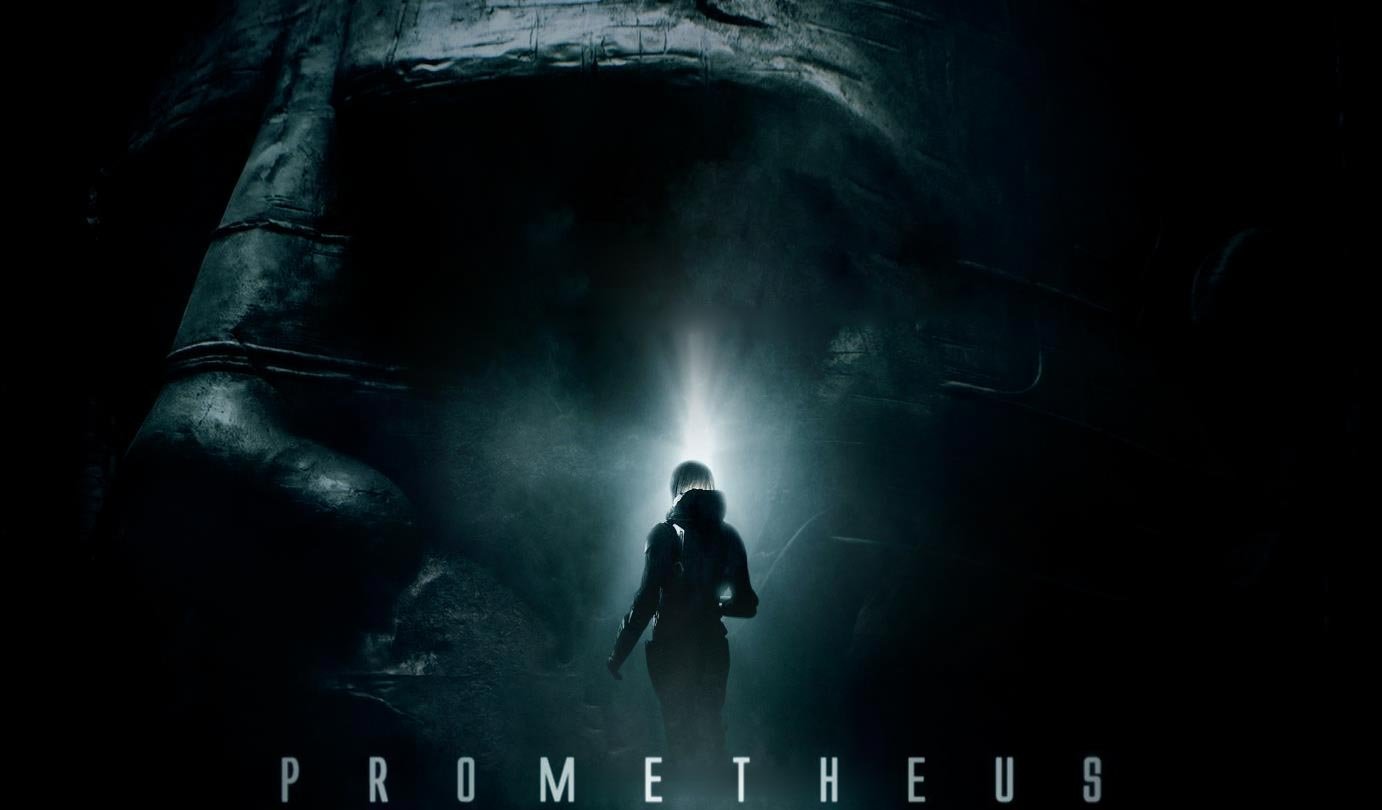
Elizabeth Shaw is not the protagonist Prometheus thinks it wants. The film keeps trying to hand the story to David, to Weyland, to the Engineers, to the architecture itself. Shaw survives anyway—not because the script always knows what to do with her, but because Noomi Rapace plays belief as a physical condition. You feel it in her shoulders after Holloway dies, in the way she says “I still believe” like a person arguing with a ceiling, not like a screenwriter checking a theme box. That distinction matters. Blockbuster science fiction usually treats faith as backstory or punchline. Rapace treats it as metabolism.
She arrived with Dragon Tattoo credibility and a face built for endurance rather than glamour. Smart casting. Shaw is not Ripley’s echo in a prettier helmet. She is a archaeologist who crossed into theology because the map in the cave looked like an invitation addressed to her personally. Rapace sells that narcissism of wonder without making Shaw adorable. You can think she is wrong about the Engineers and still believe she is honest, which is the only contract the third act needs when everything else goes feral. For a character breakdown of beats and motives, see the Elizabeth Shaw character guide—this essay is about what Rapace adds that a plot summary cannot carry.
Earnestness as a risk the film accepts
Earnestness is unfashionable in 2012 tentpole cinema. The default mode is wink, quip, armor. Shaw walks in with a cross and a fiancé who treats her certainty like a charming hobby. Rapace never apologizes for Shaw’s sincerity in performance, even when the dialogue wobbles. Watch her in the briefing where Holloway presents the star map. She is not passive decoration. She is listening like someone who has already decided the room is too small for what she knows. That listening is active acting—micro-reactions, breath, the flicker when science language almost touches prayer language.
Critics who call Shaw “too religious for a scientist” are often arguing with a straw archaeologist. The film’s point is that humans do not sort cleanly into data people and faith people when the data looks like a signature from God. Rapace bridges the camps in her body. When she touches the mural, she is not performing discovery montage. She is performing violation of a private hope—what if the creators are real, and what if they are monstrous? The performance answer comes before the script answer: her face collapses the fantasy in real time.
Compare her to the ensemble in casting and belief as a character flaw, where I argued the roster sells competing hungers. Shaw’s hunger is the hardest to sell because it is not cool. Cool is David. Cool is Vickers. Shaw is the person who still wants meaning after the universe demonstrates contempt. Rapace makes that want legible without begging for pity. Pity would kill the character. Endurance keeps her dangerous.
Pain after Holloway, and the body as argument
Logan Marshall-Green’s Holloway is written to collide with Shaw’s faith-shaped reasoning. When David’s poison ends Holloway, the film asks Rapace to carry grief and doctrinal stubbornness in the same scenes. She does not split them into neat acts. Grief makes the faith louder, which is psychologically true and dramatically risky. A lesser performer would play the cross moment as triumph. Rapace plays it as refusal—refusal to let corporate expedition logic be the only vocabulary left.
Then comes the Med-Pod sequence, which I treat at length in the caesarean essay. Rapace’s work there is not “screaming victim” shorthand. It is procedural panic with a mind still attached. Shaw chooses violence against her own body because the mission—and the company—will not grant her consent. Rapace sells agency inside horror. That is franchise-rare. The Alien lineage often positions women’s bodies as contested territory; Shaw fights back on-screen in a way Ripley’s era could only imply. Rapace’s jaw, her hands on the controls, her sob that turns into focus: the scene works because the actor treats Shaw as a person solving an impossible problem, not as a prop for slime.
Medical realism nitpickers miss the genre contract. The Med-Pod is a cruel joke about Weyland’s gendered product design. Rapace plays the joke as insult, not as magic tech. Insult fuels rage. Rage fuels the cut. The performance makes the politics bodily before the pregnancy guide can explain them in prose.
The final movement: belief after contempt
Shaw’s last act choice—salvaging David, pointing the stolen Engineer ship toward their homeworld—is divisive for plot reasons. Rapace makes it divisive for human reasons. She plays Shaw as someone who cannot stop asking questions even when answers have tried to kill her twice. That is not heroism. It is obsession with a spiritual flavor, which tracks everything we have seen. She does not smile like an action hero launching a sequel hook. She looks exhausted, wounded, and still hungry. Hunger reads as faith’s ugly twin.
This is where performance outruns franchise planning. Rapace’s Shaw feels like a person who would keep going even if no sequel existed. That integrity saves the ending from feeling like pure setup. Setup is Guy Pearce under latex declaring himself a god. Shaw’s face in the epilogue is smaller, meaner, more believable. She has seen creators who discard their children. She has seen CEOs who buy the sky. She still wants to speak to the source. Rapace does not judge Shaw for that want. She inhabits it, and lets you judge.
On rewatch, notice how often the camera finds Shaw watching David. Rapace plays those beats like a person who knows android politeness is not safety. Her stillness mirrors Fassbender’s in a human register—two kinds of patience, two kinds of threat. The David performance guide covers his side. Rapace’s side is the mirror: faith as stubbornness, stubbornness as survival, survival as the only sermon left when the Engineers refuse to translate.
I will not claim Shaw is a flawless feminist icon. The film uses her pain as plot fuel sometimes. Rapace still prevents Shaw from collapsing into symbol only. You remember a woman, not a thesis. In a movie that loves murals and myth, that human specificity is craft worth defending. If Prometheus is a cathedral, Rapace is the person in the front pew who actually means the words— even when the choir is off-key and the priest is a nine-foot pale giant who wants you dead.
Thirteen years later, online discourse still treats Shaw as “the believer” in a shorthand that flattens Rapace’s work. Believer is not a personality type. It is a choice under pressure, renewed scene by scene. Rapace renews it until the credits. That is why Shaw endures in memory when other blockbuster protagonists blur: the performance refuses the easy exit. No wink. No armor. Just a cross, a wound, and a question addressed to the dark. The dark does not answer. Shaw keeps talking anyway. So do we, in parking lots, because Rapace made us believe someone like her could exist in a universe this indifferent—and keep walking.
Consider Shaw against Ripley one more time—not as competition, but as lineage. Ripley survives through pragmatism sharpened by trauma. Shaw survives through meaning sharpened by trauma. Both are valid franchise strategies. Only one requires an actor who can sell prayer without irony in a movie that also shows a man melted by black goo. Rapace holds the tonal balance when the script wobbles. That balance is why Shaw memes skew toward respect more than mockery, even from viewers who hate the plot. Performance is the floor the plot stands on. Remove Rapace and the floor creaks louder than the third act already does.