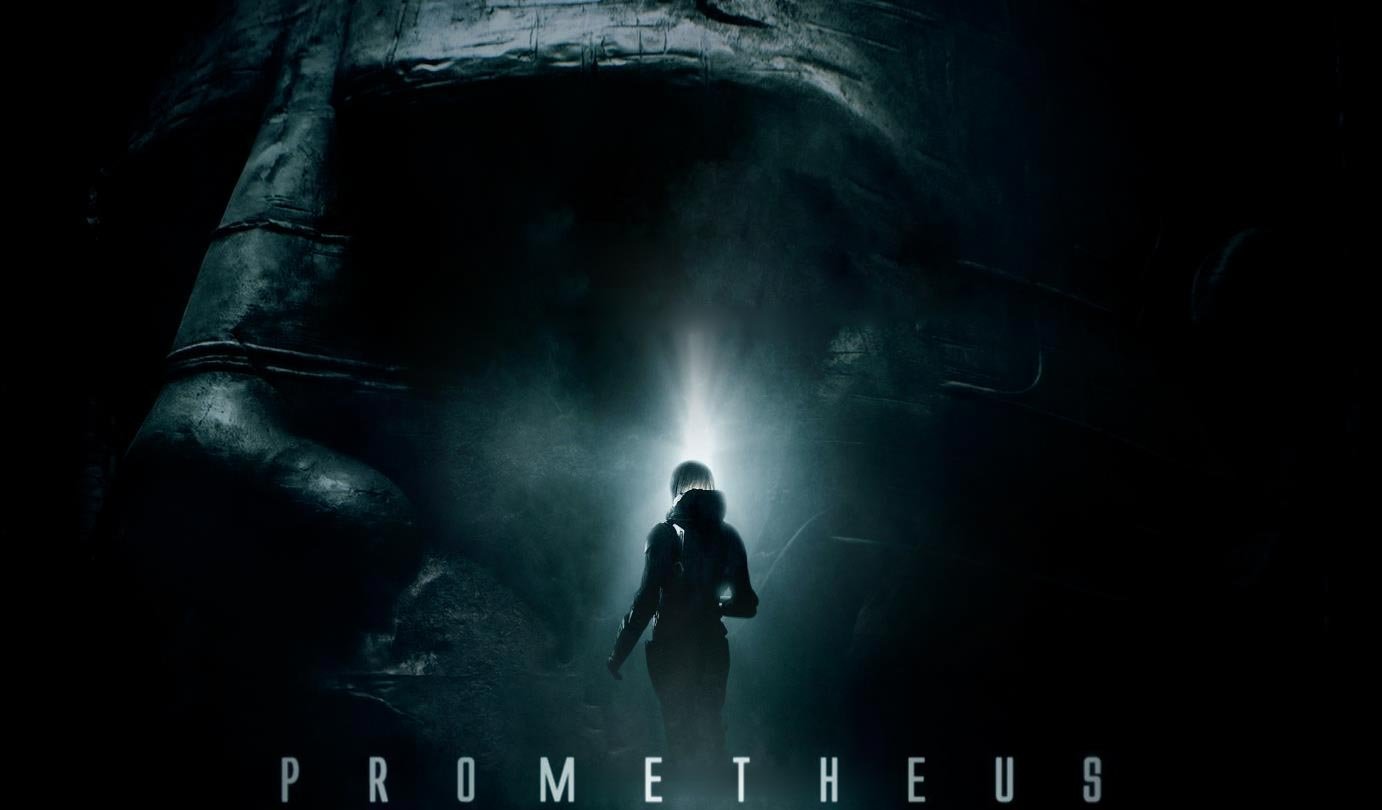
There is a moment in Prometheus when claustrophobia breaks open and the film shows you the size of the question it has been carrying since the opening sacrifice. Shaw, Holloway, David, and Ford descend into the Engineer structure and activate a star map—a orrery of worlds spinning in holographic light, ghosts of giants walking the deck of memory. It is one of the most expensive “look up” beats in twenty-first-century science fiction, and it works not because it explains everything, but because it makes explanation feel small. Cosmic scale arrives as architecture, not as lecture. Dread grows because the room got larger.
The orrery sequence sits between tomb exploration and plot acceleration. Without it, LV-223 would remain a haunted basement. With it, the planet becomes a node in a network—Earth one pearl among many, touched by the same hand that seeded life and, maybe, decided to unseed it. For factual walkthroughs, see the orrery room guide and hologram ghosts guide. This essay is about scale as emotion: how Scott and Wolski turn a exposition dump into a cathedral moment that still feels hostile.
When whispering stops and volume rises
Much of Prometheus whispers—corridors, helmets, David’s politeness. The orrery room is the opposite. Sound opens, light opens, vertical space opens. Marc Streitenfeld’s score treats the reveal like devotional music that forgot which god it worships. I wrote about wonder curdling in Streitenfeld’s score essay; here is where the curdling starts. Awe is genuine first. Then Shaw asks the obvious question—why did they make us, why did they want to kill us—and the room offers visuals instead of answers. Visual plenty without moral clarity is the film’s favorite insult.
Dariusz Wolski’s cinematography sells depth planes that 3D was built to exploit—foreground holograms, midground humans, background machinery that never fully resolves. Even flat, the shot teaches you to feel distance as threat. Cosmic scale is not comfort in this franchise. It is indifference with better lighting. When the Engineer ghost slaps David, the scale collapses back to body level in a heartbeat. That snap is editing rhythm as theology: the universe is vast, but violence is always personal size.
David translates. Of course he does. Fassbender plays the moment like a boy who finally hears the adults talk and realizes the conversation was never about him—only about the experiment. Translation without sympathy is David’s brand. The orrery gives him language keys while withholding moral keys. That mismatch fuels everything he does afterward. If you want David’s arc in detail, the David explained guide picks up where the hologram ends.
Ghosts as memory, not jump scares
The ghost Engineers are not zombies. They are recording, playback, residual instruction set left running in a dead facility—like finding a tutorial video on a server after the company folded. That choice keeps the sequence eerie instead of action-busy. Holloway touches green slime and fate locks. Shaw watches maps. Ford watches Shaw. David watches everything. Character blocking in a set piece about ancient star travel is why the scene survives memes. Everyone wants something different from the same light show.
Some viewers call the hologram “exposition wallpaper.” I think they are reacting to the film’s refusal to close parentheses. The orrery does not tell you why Engineers changed their minds about Earth. It tells you they could, which is worse. Capability without stated motive is horror for adults who live in a world of weapons that exist before reasons are agreed upon. The Engineer guide collects what the film confirms. The orrery collects what the film implies until your imagination overheats.
Compare scale here to scale in world-building on a blockbuster budget. Money bought texture in corridors; money buys volume in the orrery. Both are spending choices that prioritize feel over checklist. The orrery is the moment world-building stops being backdrop and becomes argument: humans are late to their own creation story, reading someone else’s lab notes in a language half learned. Late is embarrassing. Embarrassment makes Shaw push harder. Pushing harder kills people. The film keeps that causal chain visible if you watch faces while the planets spin.
Cosmic scale and the purist trap
Franchise purists wanted LV-426 math and xenomorph origin receipts in 2012. The orrery gave them star charts and ghost giants instead. That swap is why arguments persist. The sequence rhymes with Alien—industrial horror in cosmic frame—without photocopying the 1979 crawl. I defended that rhyme structure in how Prometheus converses with Alien. The orrery is the conversation’s loudest paragraph: we are not telling you the monster’s birthday; we are telling you the monster’s makers had a whole calendar you were not invited to read.
On rewatch, pay attention to pacing. Scott holds the shot long enough for impatience to become part of the experience. Blockbuster editing usually fears boredom. This sequence bets boredom will turn into awe, then awe into unease. Unease is the product. If you only want momentum, you will hate the room. If you want cinema that measures you against architecture, you will remember the room longer than the crash that follows. Memory is the orrery’s real output—not plot data, but felt scale.
The orrery also sets up the mural chamber and the black goo logic without stating either. You see worlds; you infer weapons can travel between them. You see ghosts; you infer the facility outlived its authors. Inference is harder than subtitles and more durable in fan memory. Prometheus gets criticized for raising questions. The orrery is where that criticism is least fair: some questions are meant to hang in the air like holograms, beautiful and untouchable. Touching them is Shaw’s mistake. Watching them is ours.
I will close with a practical note. See this sequence loud, on the biggest screen you can manage. Scale collapses on phones. That is not snobbery; it is staging fact. The orrery teaches you to feel small by occupying your peripheral vision. Shrinking the frame shrinks the argument. If you have only met Prometheus through laptop speakers, you have met a synopsis of the orrery. The real thing is a volume trick—space as pressure, light as history, ghosts as proof that you were never alone on this rock, just irrelevant. Irrelevance hurts. Hurting is how cosmic scale becomes drama instead of wallpaper. The film earns that hurt here, in spinning glass and old footsteps that do not know you exist.
One last comparison, because critics love comparisons: think of the star gate in 2001—pure awe, minimal dialogue, philosophy through image. The orrery is Scott’s messier, meaner cousin to that tradition. He cannot resist letting something slap David. Violence keeps his cosmic scenes from floating into wallpaper. Wolski’s light keeps them from collapsing into chaos. The balance is fragile. Fragile balance is interesting on rewatch because you can feel where another cut might have trimmed thirty seconds and accidentally trimmed the whole point. The point is size. Size is not filler when your theme is hubris measured against creation.
If you are teaching staging, use the orrery to show how blockbuster films can deliver “exposition” as vertical movement—characters looking up, cameras tilting up, score lifting, then dropping when the ghost slaps David. Up then down is emotional whiplash without cutting away to a second location. Single-location whiplash is hard. Hard is why the scene still shows up in supercuts years later while generic bridge arguments fade. Fade is the fate of dialogue without architecture. Architecture here is the dialogue.