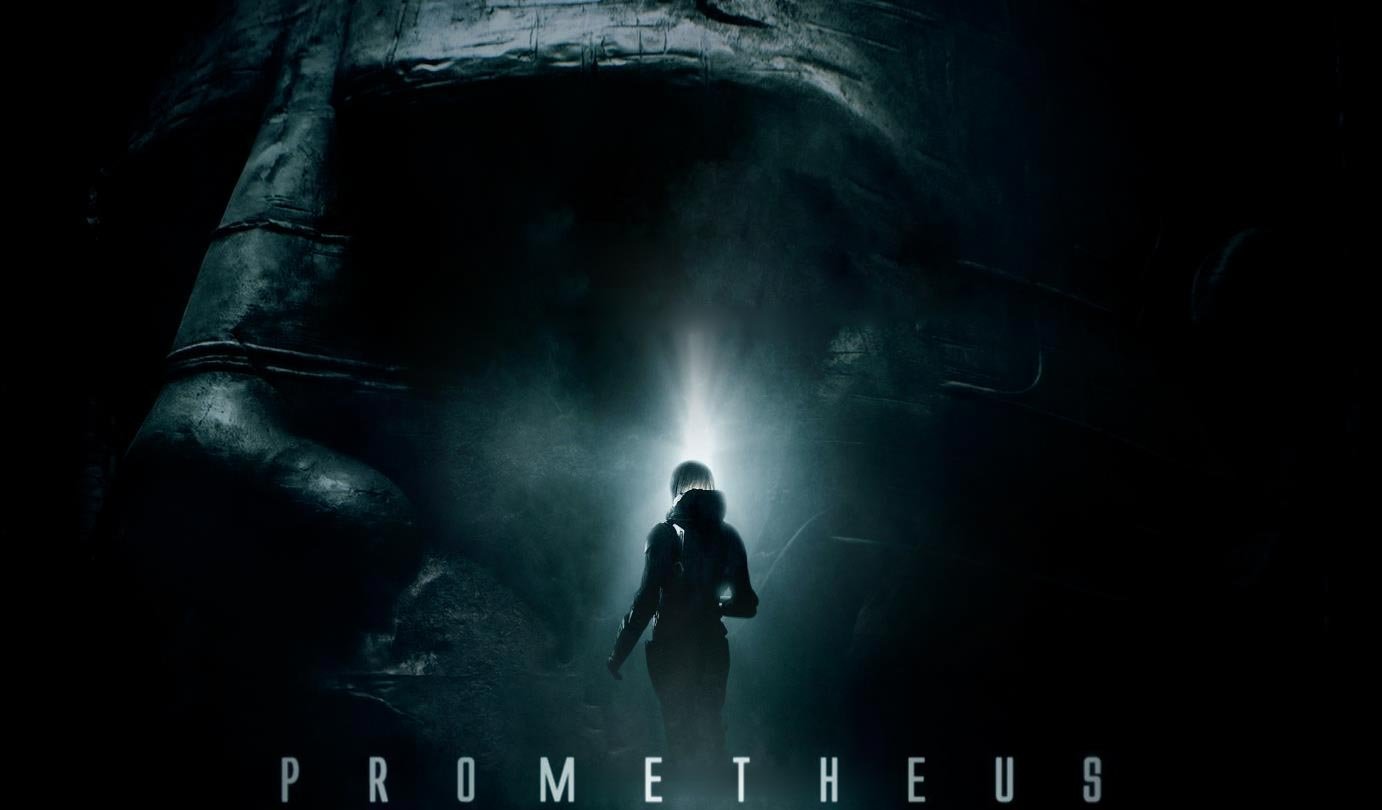
Before the hammerpede, before the black goo, before anyone says “Engineers” out loud like a TED talk, Prometheus takes you into a room that looks like a cathedral built by a biomechanical mind—and asks you to read faith on the walls. The mural chamber is not a lore vending machine. It is a mood contract: creation and violation painted in the same palette, worship and weaponry sharing a frame, H. R. Giger’s grammar translated into blockbuster scale without turning into a wiki diagram. You are meant to feel uncanny before you are meant to understand. Understanding is optional. Dread is not.
Giger died in 2014; his shadow over this film is long enough that every creature blog becomes a family tree argument. I wrote about that shadow in Giger’s shadow and the creature lineage. The mural chamber is where the echo is loudest—not because a xenomorph appears in fresco form, though fans will point at the silhouette, but because the room treats biology as liturgy. For beat-by-beat description, see the mural chamber guide. This essay is about why the scare lives in silhouette and implication, and why tooth-counting misses the point.
Worship in silhouette, not in subtitles
Shaw enters the chamber like a pilgrim who forgot the shrine might hate her back. Noomi Rapace plays discovery as spiritual vertigo—the cross around her neck suddenly small against a wall that suggests creators who look like gods and behave like weapons manufacturers. The film does not pause for her to explain theology. It lets her face wobble. That wobble is the scene’s dialogue. Lore nerds want labels. Cinema wants reaction shots. Prometheus chooses cinema often enough to matter here.
The famous “xenomorph-shaped” figure in the mural is deliberately ambiguous—gesture toward the franchise without delivering a birth certificate. Ambiguity is not cowardice. It is horror strategy: let implication do work jump scares cannot. If the mural confirmed “this is the alien origin,” the room would shrink to homework. Instead it suggests lineage as curse—creation cycles that eat their makers, sex and violence fused in iconography Giger spent a career perfecting. You feel the fusion before you name it. Naming is for guides and after-show podcasts. Feeling is for the theater.
David watches Shaw watch the mural. Michael Fassbender plays him as a curator who finally sees the artist’s signature. That beat connects chamber to character: David loves humans as artifacts; the Engineers love biology as clay. The room is a meeting point of appetites. Neither appetite is healthy. Healthy was never the franchise brand. The David performance guide tracks his arc forward. The mural is where his arc gets its aesthetic license—permission to treat everything living as interesting, including pain.
Giger echoes without photocopy duty
Prometheus was never going to paste 1979 H.R. Giger panels onto 2012 pixels and call it homage. Production design extends biomechanical motifs—ribs as arches, fluids as ornament, bodies as architecture—into a cleaner, blockbuster-lit space. Cleaner does not mean safer. The chamber is still wet with suggestion. Wolski’s light makes stone look like skin. Skin looks like something that could open. Opening is the fear.
Compare the chamber to the orrery in orrery and cosmic scale. The orrery sells distance. The mural sells intimacy with cosmic ideas—gods at arm’s length if your arms are long enough. Together they form the film’s scale grammar: vast above, violating below. Purists who wanted only corridors and dripping pipes get both, just separated by pacing that frustrates people who treat runtime as enemy. Runtime is the method. Method is how dread accumulates without constant teeth.
Some critics call the chamber pretentious. Pretentious is often shorthand for “asked me to look without paying me off in thirty seconds.” Fair complaint for some viewers. Not for me. The chamber pays off in rewatch texture—details you catch second time, symbols that refuse single readings, the way Holloway’s infection route rhymes with imagery on the wall without the film underlining the rhyme with a narrator. Underlining is for television. This is a movie that still trusts a held shot of a wall to do priest work.
Why lore nerds miss the scare
Lore nerds enter with spreadsheets. The mural chamber defeats spreadsheets on purpose. It offers partial myth—Engineers, goo, worship, maybe xenomorph grammar—without locking canon. Locking canon would turn the room into a trailer for action figures. Instead Scott stages a transition from archaeology to contamination: Shaw’s awe, Holloway’s touch, the green slime, the door closing on a larger ship interior. The scare is not “secret origin revealed.” The scare is “origin might be evil, and your boyfriend just put his hand in it.”
That contamination bridge matters for the black goo argument I make in black goo as accelerant. The mural primes you to read goo as sacrament and weapon at once—religious technology, industrial religion. Without the chamber, goo is just slime. With the chamber, goo is what happens when theology skips ethics. Ethics skipped is the Engineer brand. Humans just arrive late to the sermon.
On rewatch, listen to sound in the chamber—drips, footsteps, breath inside helmets. I wrote about proximity in sound design as a second script. Here proximity is archaeological: you are close enough to history to get infected by it. History as infection is a metaphor until Holloway’s face proves it literal. Literal is Prometheus at its meanest: ideas have teeth when you touch them without consent.
I will not claim the mural solves franchise questions. It does not. It does something better for horror—it makes questions feel dangerous to want. Shaw wants anyway. That wanting drives the plot more reliably than any single image on the wall. Giger echoes in the chamber are not Easter eggs for completionists. They are emotional tuning forks: strike them and the rest of the film vibrates at the same frequency of sacred disgust. Frequency is the scare. If you leave counting toes on fresco monsters, you heard the note and ignored the chord. The chord is what still hums in memory when the credits end—creation painted beautiful, creation painted hungry, both true, both on the same stone, both watching you like you were always part of the design, whether you consented or not.
If you build a double feature, pair the mural chamber with the opening sacrifice—two rooms, two acts of creation, one voluntary and one implied by drink, both using the same visual language of fluids and dissolution. Pairing clarifies how Prometheus repeats motifs without repeating scares. Repetition with variation is how myths work in oral traditions. Blockbusters rarely trust oral tradition pacing. This one trusts it twice, in stone and in water, before the explosions start. Explosions are dessert. The chamber is the meal you were supposed to chew slowly, even if the studio marketing sold you dessert first.
Production art books and making-of galleries often freeze-frame the mural for Easter eggs. Easter eggs are fun. They are also a trap that turns a scare into homework. Watch the scene once for Shaw’s face, once for Holloway’s hand, once for David’s stillness—three human reads of the same wall. The wall wins only if you let it reduce people to props. The film refuses that reduction by cutting to infection soon after. Infection is the mural’s answer to touchy archaeologists who confuse contact with consent. Consent was never offered on LV-223.