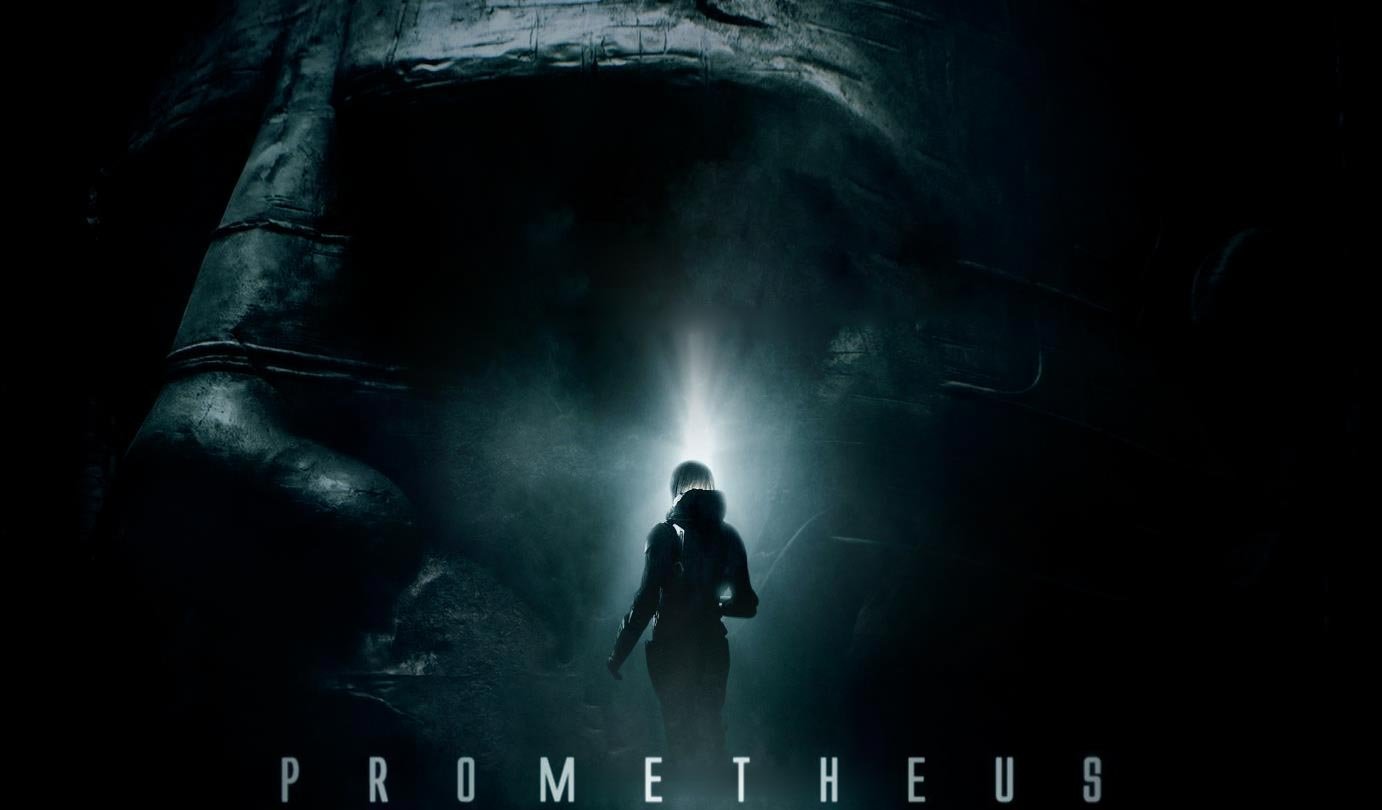
Prometheus opens on a waterfall and a white body, and for three minutes the film is not a prequel, not a franchise entry, not a Ridley Scott summer product. It is a creation myth told in silence, scored like prayer, filmed like a nature documentary that wandered into theology. An Engineer stands at the edge of a world, drinks black fluid, disintegrates into the river, and seeds biology with his broken DNA. No subtitles. No Weyland logo yet. No scientist explaining anything. Just scale, sacrifice, and the rude suggestion that making life might be a job someone performs without loving the result.
That prologue sets tone law for everything after. Corporate hubris, star maps, haunted pyramids—they all read as late arrivals interrupting a story older than stock options. For plot summaries, see the opening scene guide. This essay is about why the sacrifice works as myth before it works as lore, and why treating it as “Engineer drinks goo” is like treating 2001’s monolith as a gray box.
Creation before the corporate clock
Blockbuster openings usually start with logos, quips, or explosions. Prometheus starts with geology. Iceland doubles for primordial Earth—or for an Engineer garden world; the film enjoys not pinning it down immediately. That ambiguity is generous. Generous openings invite argument. Pinning everything down invites checklist culture. Checklist culture kills wonder. Wonder is the only currency this franchise had left that money cannot forge perfectly.
The Engineer’s body is perfect and doomed—classical statue meets suicide note. When he falls apart, the camera watches particles like they matter. They do matter; they become us, or become life-as-we-know-it, which is the same insult from a certain angle. Sacrifice here is not Christlike redemption. It is industrial seeding—creation as labor performed by someone who may not survive the shift. That reading rhymes with themes I unpacked in creation, cruel parents, and corporate entitlement, except the parent in the opening has not yet learned to ghost his children. He is still paying upfront. Payment is body horror at myth scale.
Streitenfeld’s score treats the sequence like liturgy. I wrote about reversed sheets and curdling wonder in the score essay; here the wonder is pure because no human ego has entered to ruin it yet. Ego arrives soon—Weyland’s hologram, Shaw’s cross, Holloway’s smirk. The opening is the last time the film lets creation look majestic without asking you to bill it to a shareholder. Majestic does not mean kind. Kind is not on the menu.
Sacrifice as tone, not as user manual
Fans wanted the opening to function like a manual: which planet, which year, which exact bioweapon recipe. The film refuses. Refusal is feature. Manual openings train you to expect answers on schedule. Myth openings train you to expect awe with teeth. Teeth show later when humans find the same black fluid in urns and treat it like a problem to solve instead of a rite to respect. Disrespect repeats the opening in reverse—where the Engineer gave body to seed life, humans take life to feed curiosity.
The black fluid in the prologue connects to the accelerant argument in black goo as accelerant, not monster. Same substance, different context: sacrament at the waterfall, hazard in the pyramid. Context shift is how Prometheus talks about technology without monologues. Drinking is voluntary in the opening. Exposure is accidental and weaponized later. Voluntary vs. forced is moral weather the rest of the movie walks through in human bodies.
Some viewers call the prologue pointless because it “does not explain the plot.” Plot is not the only grammar. Tone is grammar. The opening teaches you how to feel—small, implicated, curious about creators who treat flesh as medium. When the Engineer at the end kills humans like pests, you should remember the waterfall. Same species line, different mood. Mood swing without apology is horror truth. Parents create; parents destroy. Sometimes the same parent in the same week.
Myth vs. marketing, myth vs. sequel
The 2012 campaign teased this opening without giving it away—see marketing mystery vs. monster. Audiences walked in expecting monsters first. They got myth first. That sequencing split the room. Split rooms age into cults and grudges. Both are afterlives. The opening is why the grudge is not purely about “bad writing.” It is about contract mismatch—some people wanted a horror movie cold open, others got a creation poem. Poems are risky in June releases. Risk is on brand for Scott when studios let him be.
Sequels and deleted material complicate the opening without erasing its power on a clean rewatch. Alien: Covenant’s prologue rhymes David with creation imagery; fan edits mash Engineers into clearer timelines. Ignore them for one screening. Watch the theatrical opening as self-contained myth. A being dies to make life. Life grows up to find the maker’s trash. Trash kills. Cycle complete. You do not need a flowchart to feel the tragedy in that loop—only patience and a tolerance for not knowing which planet you are looking at yet.
On location, Iceland gives the prologue hostile patience—wind, water, scale indifferent to human drama. I wrote about those choices in Iceland and Pinewood. Real geography sells myth better than matte painting because your body believes wind. Belief in wind makes disintegration feel possible. Possible is the opening’s magic trick: CGI particles anchored in a place you could visit and still feel cold.
I will close where the film closes the prologue—on a DNA strand, on life beginning, on a cut to the Prometheus title card that feels like a rude jump forward in time. Rude is intentional. The corporate expedition is an interruption of myth time with invoice time. Shaw and Holloway are children of the waterfall whether they know it or not. Their journey is what happens when creation myths meet PowerPoint. PowerPoint usually wins in boardrooms. Myth wins in memory. The opening sacrifice is why this movie’s memory still feels larger than its plot holes—because it started by showing you the largest thing first, then spent two hours proving humans were never ready to hold it. Not ready is not the same as not worth showing. Scott showed anyway. That nerve is rarer than correct science.
Teachers sometimes use the prologue to explain non-linear time in myth vs. linear time in corporate mission logs. That pedagogical move works because the cut from DNA spiral to Weyland-funded ship is intentionally whiplash. Whiplash is the lesson: humans compress creation into quarters; movies compress eons into minutes; both compressions are lies that help us live inside unbearable scale. The opening tells the truth about scale, then the rest of the film shows you what happens when humans ignore the truth to chase a map. Maps are smaller than waterfalls. Shaw learns that late. The opening knew it early.
The Engineer performer—Duncan Shaw in credited reports—deserves a nod for physical storytelling in seconds: tall, muscular, tragic, no dialogue to save him. Body as myth text. When people complain humans look too small beside Engineers later, remember the opening already taught you scale as theology. Theology does not apologize for height. Height is why Shaw’s questions feel brave and foolish simultaneously. Brave and foolish is the human condition in one sentence. The prologue writes that sentence in black water before anyone says a word.