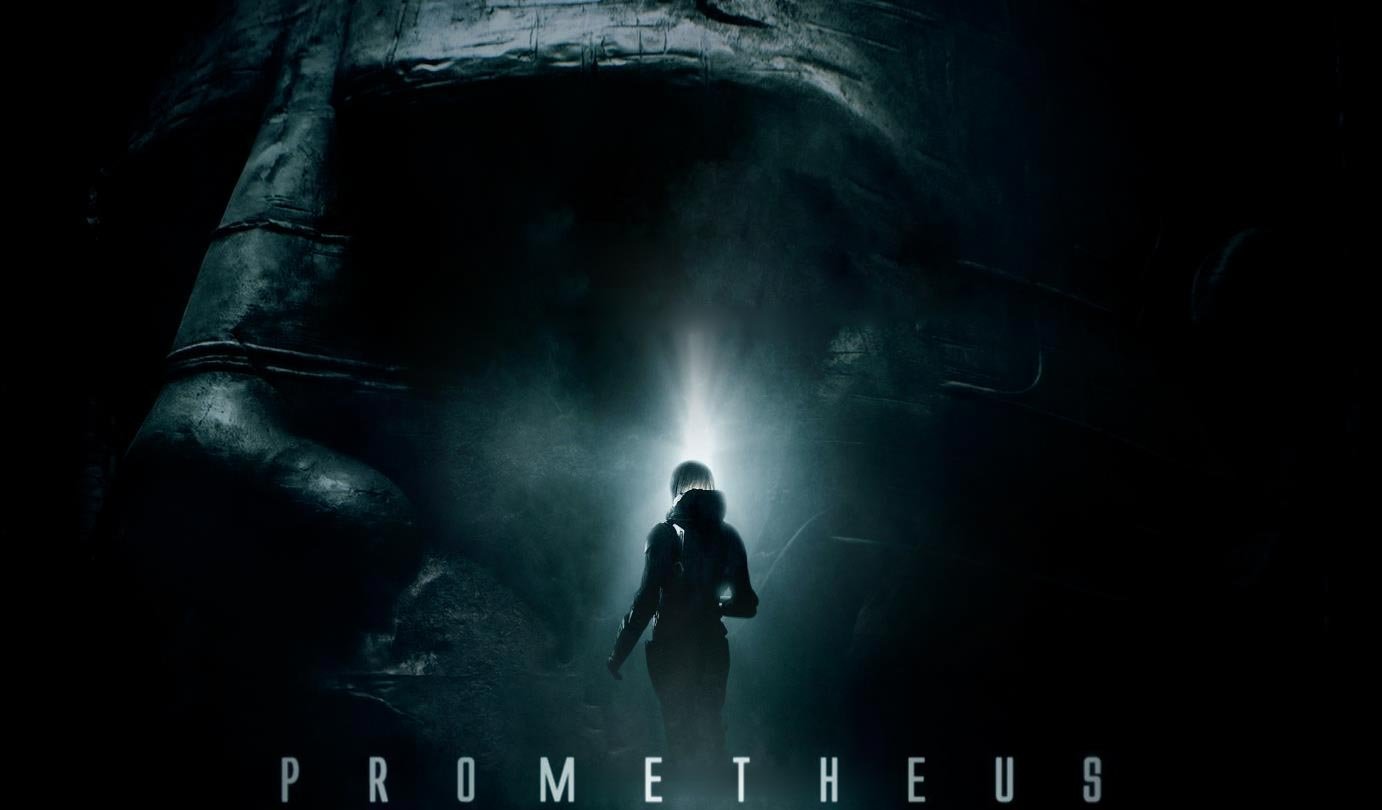
Nobody walked into Prometheus in June 2012 with a blank slate—not if they watched television, browsed YouTube, or stood in a theater while the “Not Prometheus, not Alien, something else” teaser played on loop. The campaign was a transmedia runway: viral prologues, Weyland Industries websites, TED talk fiction, trailer beats that smuggled theology under monster music. By opening night, audiences had been trained to expect answers about creators, black goo, and whether the xenomorph was returning. What they got was a film that partially honored mystery and partially refused monster math. The gap between marketing and movie is not a scandal. It is part of why the argument never ended.
I covered pieces of this elsewhere—the viral prologues essay, the Prometheus trailers guide. This essay zooms out: how 2012 sold mystery vs. monster, how that sale rewrote opening-night contracts, and why the film’s polarized reception is inseparable from the campaign’s brilliant, contradictory nerve.
Mystery as product launch
Ridley Scott’s return to science fiction was always going to be an event. Fox marketed it like a product launch because Weyland’s hubris is product launch culture inside the story. TED 2023—Guy Pearce as Weyland on a futuristic stage—dropped online before the feature and framed immortality as keynote speech. The TED 2023 short is not essential plot homework, but it taught early adopters that Prometheus would speak corporate messiah language. That language primes mystery: who made us, can we meet them, can stockholders monetize the meeting.
Websites and ARG-adjacent material widened the runway—fake corporate timelines, recruitment tone, the sense that the film was a door into a larger room. ARG culture peaked in the late 2000s; Prometheus borrowed the instinct without requiring puzzle completion. Smart. Requiring completion alienates casual ticket buyers. Hinting at depth rewards both casual and obsessive viewers. Hinting is also risk: obsessives feel baited if the theatrical cut withholds receipts. Casual viewers feel lost if trailers promised clearer monster beats. The campaign sat on both fences. Sitting on both fences is how you fall into legend or into Rotten Tomatoes fights. Sometimes both.
The famous “Space Jockey” question—what was that ship in Alien?—hovered over every interview. Scott and Lindelof fed mystery while insisting they were not remaking 1979. Interviews on outlets like The Guardian walked the line: Engineers connect, xenomorph is not the headline. Trailers sometimes walked a different line—quick shots of slime, screams, biomechanical shadows that read as Alien to muscle memory. Muscle memory is a marketing asset. Muscle memory is also a liability when the theatrical cut chooses orrery over facehugger for long stretches.
Monster beats in a trailer editor’s hands
Trailer editors work in seconds, not acts. They grab the hammerpede shock, the scream in the Med-Pod, the rolling Juggernaut, the Deacon silhouette if available, and they stitch chaos montage that says “horror returns.” Theatrical Prometheus spends enormous runtime on Shaw’s faith, David’s politeness, Vickers’s ice, Janek’s accordion—horror yes, but horror as punctuation in a myth argument. Punctuation vs. paragraph mismatch is why some viewers felt tricked. Trickery assumes malicious intent. I see genre collision instead: marketing must sell threat in two minutes; Scott wanted to sell scale in two hours.
3D and IMAX positioning added another sell—see the void in premium format. I wrote about IMAX release context in the guides hub; the marketing tied depth to awe, not only to creatures jumping at camera. Awe marketing attracts mystery crowd. Monster marketing attracts legacy horror crowd. Same ticket, different imagined movies. Imagined movies collide at the popcorn line when the Deacon shows up once and credits roll. One-and-done creature beats read as tease if you wanted an Aliens-style arsenal. One-and-done reads as discipline if you wanted myth closure without nest invasion. Discipline vs. tease is the Deacon argument I make in the Deacon ending essay.
TV spots in summer 2012 repeated lines like “search for our beginning” and “we were wrong” over imagery that felt more action-forward than the middle hour of the film actually is. “We were wrong” is perfect mystery copy—it implies revelation without specifying revelation of what. Wrong about God? Wrong about safety? Wrong about xenomorph continuity? Yes. All of the above. Copy that broad is catnip for SEO and for disappointment threads. Disappointment threads are marketing afterlife Fox did not have to pay for.
Contract mismatch and the decade after
Opening-night contracts are invisible. You buy a ticket believing you know genre. Prometheus tested contracts hard. Mystery viewers signed up for creation questions—got them, plus body horror and a caesarean that curdled stomachs anyway. Monster viewers signed up for facehugger nostalgia—got rhymes, goo, a Deacon cameo, and a lot of holograms. Neither group got lied to by the film so much as sold overlapping promises by a campaign that needed every quadrant. Quadrant filmmaking is economics. Economics is not art, but art had to live inside economics to exist at nine-figure scale.
The long afterlife—memes, essays, YouTube explainer economy—partially repairs mismatch. Home video lets you pause murals; blog posts like Prometheus explained collect threads the theater rushed past. Extended cuts and deleted scenes complicate the picture without settling it. I wrote about that archaeology in deleted footage and extended editions. Marketing promised a key; home release offered more doors without proving one door was “real.” Real is fan religion. Religion keeps franchises warm.
Compare 2012 to later prequel marketing. Subsequent films often lead with creature count and legacy character callbacks louder and earlier. Prometheus’s campaign still looks like a bet that mystery could be summer-friendly if you dressed it in Weyland chrome. That bet did not fully pay off in unified applause. It paid off in argument—and in box office respectable enough to greenlight more Scott in space. Argument is underrated as success metric. Applause fades. Argument keeps search traffic and podcast episodes alive. Alive is what studios pretend they hate and secretly love.
On rewatch in 2026, treat the campaign as prologue text, not contract law. Watch TED 2023, then the waterfall sacrifice in opening sacrifice essay, then the trailers with sound off, then the film. Notice how each layer sells a different temperature—keynote hot, myth cold, trailer frantic, feature patient. Patient features lose opening weekends to frantic ones. Patient features win dorm rooms later. Prometheus was always a dorm room film wearing blockbuster clothes. Marketing had to sell clothes. Clothes lied a little. Body underneath is still interesting.
I will not defend every trailer choice. Some cuts implied clearer Alien linkage than the theatrical myth wanted. I will defend the campaign’s central nerve—mystery as event—and note the cost: a film people still describe as “good but…” because “but” is where contract mismatch lives. Mystery vs. monster was never a binary the movie could fully resolve without becoming another Alien clone. Marketing pretended resolution was coming. Art pretended questions were enough. Pretense on both sides made theater air electric in June 2012. Electric air is what event cinema feels like before the reviews land. Reviews landed. Electric air remained. That remainder is rare. Catch it when you can—preferably loud, with a friend who disagrees with you about the Deacon, and no YouTube explainer queued until the credits finish. Let the argument be the afterparty the studio accidentally booked when they sold gods and slime in the same breath.