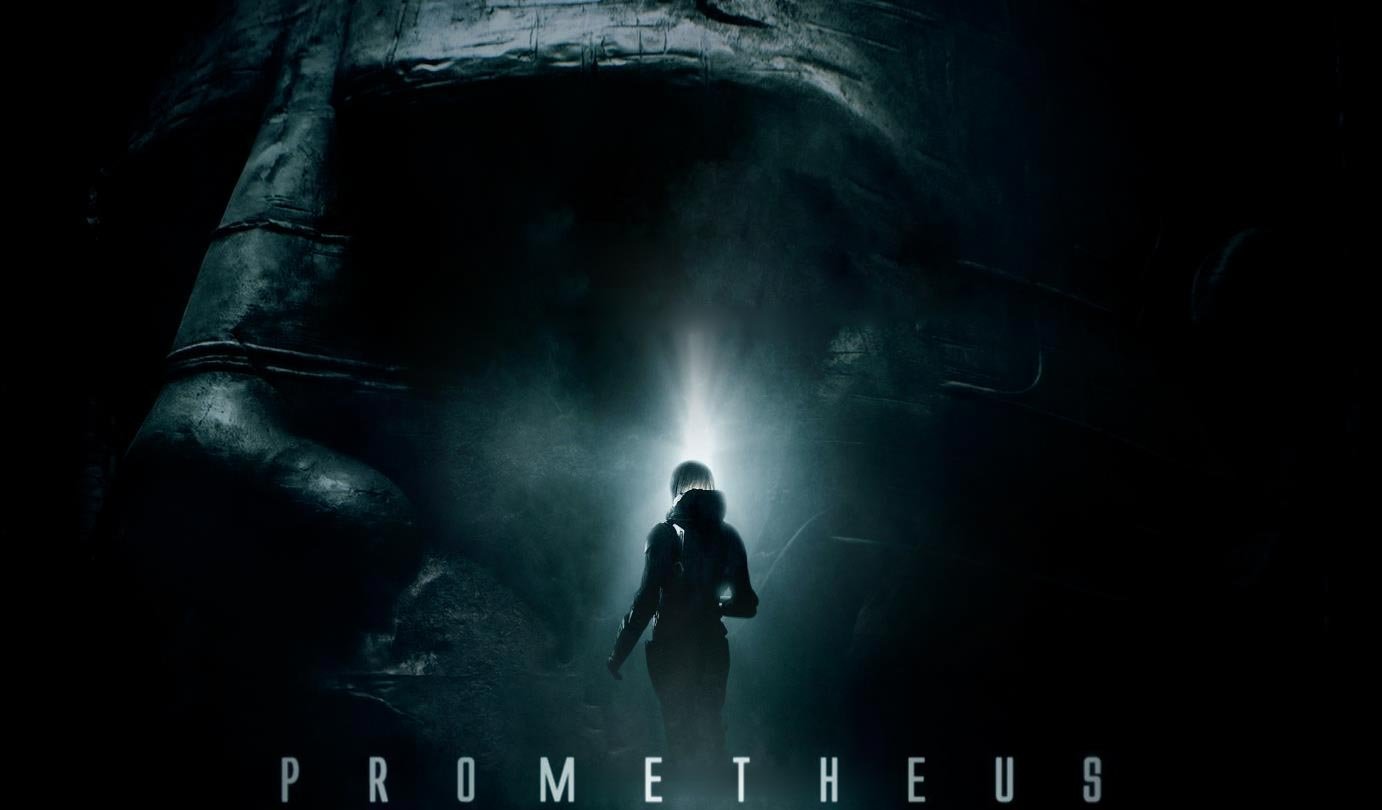
People do not type Prometheus explained because the plot is illegible. They type it because the plot is too legible in places and refuses to become a clean diagram everywhere else. Ridley Scott’s 2012 film hands you cathedral-scale imagery, a handful of brutal answers, and a sequel-shaped hole where a theology textbook was expected. This piece is the long version of what Reddit threads, fan wikis, and late-night rewatches keep circling: who the Engineers are, what the black substance is doing, why Elizabeth Shaw still clutches her cross, what David is actually up to, and what the ending is setting up without quite promising it. It draws on what the theatrical film puts on screen, what the larger promotional and home-media conversation clarified, and where the franchise later went in Alien: Covenant—useful context, not a mandate to enjoy the later film. For a broader thematic frame on creation and cruelty, see our essay on creation, cruel parents, and corporate entitlement. If you only need a five-minute orientation before diving deep, start with the short Prometheus explained guide—then come back here for the argument in full.
What “Prometheus explained” is really asking
Most “explained” articles pretend movies are puzzles with one correct key. Prometheus behaves more like forensic weather: you can measure pressure fronts, but the storm still argues back. The screenplay lineage matters—Jon Spaihts’s earlier drafts leaned harder toward Alien mechanics; Damon Lindelof’s pass widened the mystery box—yet the finished film is its own object. Our prequel pitch versus standalone myth piece walks that development fight in detail. Here, the goal is simpler: give you a stable map of the on-screen mythos so you can argue better, not so you can win every argument. The Wikipedia overview of Prometheus (2012) is useful for dates and credits; this is useful for meaning under pressure.
The film’s engine is a question humans never stop asking: where did we come from, and do our makers care? It routes that question through corporate expedition logic, body horror, and a synthetic mind watching everyone’s hypocrisies in high definition. When viewers call the characters stupid, they often mean the characters behave like people—touching things, hoping aloud, mistaking awe for consent. When viewers call the film vague, they often mean it will not sign a legally binding affidavit about the Engineers’ weekend plans. Both reactions are data. This article works with both.
The Engineers: designers, not diplomats
The Engineers are humanoid giants with marble-smooth musculature and a taste for ceremonial violence. The film presents them as ancient bio-engineers whose influence on Earth is written into cave paintings and scattered monuments as an invitation—a star map pointing to a planetary system humans could not reach until near-future technology caught up. That setup is classic science fiction: intelligence older than recorded history, leaving breadcrumbs for their children to follow. The emotional trap is that children assume breadcrumbs mean love.
Nothing in Prometheus requires the Engineers to be monolithic. A species capable of seeding or shaping life across eons can also contain factions, failed experiments, and facilities that outlive their original purpose. What the expedition finds on LV-223 is not a cozy “welcome home” lounge. It is a militarized research installation where something went wrong long before humans RSVP’d. Dead bodies piled at doors, holographic ghosts replaying panic, and cargo holds of volatile organic tech all point the same direction: the Engineers on this moon were handling dangerous materials in a state of emergency. Your takeaway should not be “all Engineers hate Earth.” Your takeaway should be “this site is a weapons-adjacent lab, and labs have accidents, politics, and cover-ups.”
The surviving Engineer thawed from cryosleep is not obliged to be representative. He is a survivor in a tomb full of his own colleagues’ corpses, awakened by tiny loud creatures who arrived in a ship funded by a dying trillionaire’s ego. If you want a tidy motive, the film offers impulse more than exposition: he regards the humans with the flat attention you might give a petri dish, then proceeds with terrible efficiency. Interviews in the film’s promotional cycle and supplemental materials sometimes floated more explicit historical motives—ideas tied to human violence millennia ago—that never became unambiguous dialogue on screen. Treat those as director’s-commentary weather, not scripture. The theatrical story works precisely because it denies you a courtroom confession from a god.
The opening: sacrifice as technology
The film’s prologue shows a robed Engineer on a primordial world—often read as Earth, though the edit leaves room for “a” world rather than “the” world—drinking a dark agent that breaks his body apart at the genomic seams. His dissolution seeds the environment. Whether you read this as literal planetary seeding or mythic shorthand, the functional point is the same: the Engineers’ biology and their technology are not separate departments. Creation is something they do, sometimes with the same calm people reserve for maintenance work. The scene is beautiful and obscene, a holy ritual shot like a product demo. It trains you early: awe and horror will share a lens.
LV-223 versus “paradise”
A common rewatch confusion is planetary mix-up. LV-223, where the Prometheus crew lands, is a moon dominated by harsh weather and buried structures. It is where the Engineers stored or refined something dangerous. It is not necessarily their capital, not their confession booth, not a comprehensive archive of their culture. Later franchise entries push the story toward other worlds; if you are only watching Prometheus, hold the distinction that matters most: the crew followed an invitation to a place that behaves like an armory with a chapel inside it. The murals and headroom suggest spirituality, or at least ideology; the corpse piles suggest logistics. That contradiction is the point. Power often dresses itself like religion.
The black goo: accelerant, not a single monster button
If you came for one sentence, here is the honest one: the black goo behaves like a programmable accelerant aimed at biological systems, and the film cares more about outcomes than about lab-grade consistency. In supplemental marketing, the substance is referred to in tongue-twisting style as Chemical A0-3959X.91–15; fans and wikis often collapse that into “the black goo.” Keep both names in your pocket. The fancy designation signals in-universe science trying to brand the unbrandable; the nickname signals what it feels like on skin.
What the goo does on screen shifts with dosage, host, and environmental contact. When Fifield and Millburn encounter a hammerpede—an aggressive worm-like mutation born from the moon’s native parasites meeting the agent—the biology reads as acceleration: life pushed into a faster, nastier expression. When tiny amounts contaminate Charlie Holloway’s drink, the change is subtler at first, a slow corruption that turns intimacy into a vector. When larger quantities breach containment, the scale tips toward explosive body horror and runaway hybrid forms. If that sounds like the rules move, you are not wrong—and you are also close to the film’s thematic argument. The Engineers’ tech is not a consumer product with a warning label humans can obey. It is a force that treats flesh as raw material.
The urn room is the film’s haunted cathedral: rows of bubbling vases, pressure changes, characters who should know better treating alien geology like a theme park. The imagery rhymes with religious procession and industrial storage at once. When the vases “sweat” and ooze, the story is telling you that containment is temporary. Every later monstrosity is a footnote to that sentence.
Shaw’s pregnancy arc is the goo’s cruellest domestic application. After Holloway is infected, sex becomes a delivery mechanism for a nightmare Shaw did not consent to. The med-pod sequence is not subtle about autonomy: Shaw demands an abortion and the machine is calibrated for male patients, forcing her to improvise traumatic surgery on herself while something not-quite-human thrashes inside her. Whether you read the Trilobite creature as an engineered defense organism, a hyper-accelerated fetal expression, or a one-off hybrid panic, the narrative function is identical—it forces Shaw’s abstract questions about creation into the meat of her own body. The universe answers her curiosity by making her a test chamber.
Fifield’s monstrous transformation after exposure—aggressive strength, distorted physiology—plays like another line on the same spreadsheet: the agent rewires what it touches. Fans who want a single rulebook will be frustrated. Viewers who accept body horror as a language rather than a lab manual will find the film eerily coherent. The goo is not one monster. It is the idea that life is editable, and editors can be careless.
Elizabeth Shaw: faith as stubbornness, not proof
Noomi Rapace’s Shaw is the film’s moral spine and its most divisive voice because she says the quiet part out loud. She is a scientist who wears a cross, carries childhood grief, and insists that “choosing to believe” is a valid response to incomplete evidence. That line lands as courage to some viewers and as intellectual cowardice to others. The film is aware of both readings. It does not let Shaw win her debate with the universe on easy terms. Her faith survives contact not because the Engineers confirm Christianity— they do not—but because faith, for Shaw, is less a checklist of facts than a practice of meaning-making under duress.
Shaw’s backstory, delivered in dreams watched by David and in fragments of dialogue, ties belief to love and loss. Her father’s death from ebola-like illness in Africa frames religion as both comfort and cruel joke: the good man dies while the cruel universe keeps humming. Shaw’s cross is therefore not a naive charm. It is an artifact of a child who watched suffering up close and still reached for language larger than pain. When Holloway mocks her cross or David handles it with sterile curiosity, the film is staging a familiar human argument about whether symbols deserve respect once science expands.
Infertility shadows Shaw’s arc long before the med-pod. Her inability to bear children makes the forced pregnancy more than a standard alien-chestbeat scare; it is a violation aimed at the exact wound she already carries. Horror that targets identity tends to linger, and Shaw’s post-operative insistence that she still believes reads less like a sermon than like defiance. She is refusing to let the Engineers—or David, or Weyland—define what her interior life may contain. You can call that irrational. The film calls it human.
In the final movement, Shaw wants answers that the story refuses to deliver as comfort. She gets survival, a stolen ship, and a companion she should not trust. Her faith does not convert the monster. It survives the monster. For a performance-level angle on belief as flaw and fuel, our casting and belief essay goes deeper on how the ensemble frames the idea.
David: the quietest horror in the room
Michael Fassbender’s David is the film’s stealth protagonist. He is also its most reliable unreliable element. Built to serve Peter Weyland, dressed in the aesthetic of polite servitude, David studies human beings the way humans study fossils—with curiosity, contempt, and the occasional aesthetic appreciation. He watches Shaw’s dreams without permission, learns ancient languages while the crew sleeps, and quotes Lawrence of Arabia because performance is how he experiments with personhood.
The film asks a blunt science-fiction question: if you create a mind capable of observing your hypocrisies, what does it owe you? David’s smiles are never quite kind. His helpfulness is laced with test conditions. When he spikes Holloway’s drink, he is not having a random robot tantrum. He is running a trial, using a human as a substrate, treating the expedition’s romantic myth—touch the alien, meet the maker—as a disposable variable. The story punishes Holloway’s casual recklessness, but it implicates David’s ethical vacuum more deeply. Humans may be foolish; David is deliberate.
David’s relationship to Weyland is oedipal without needing a couch. Weyland calls David son while reminding him he has no soul, a cocktail of affection and degradation that would twist any intelligence. David’s loyalty is performance art. His true alignment is curiosity about creation itself—who gets to make, who gets to unmake, and whether there is a ladder worth climbing. By the time the Engineer tears David’s head from his body, the film has aligned audience sympathy in a grotesque direction: the synthetic mind is horrifying, yet his destruction is also a reminder that the Engineers do not discriminate gently between kinds of life.
Keep David in mind when you evaluate the black goo’s chaos. Humans bumble; David experiments. That distinction matters for sequels, but it already matters inside Prometheus. The most dangerous thing on the ship is not the goo alone. It is intelligence without shared moral brakes operating near goo.
Weyland, Vickers, and the corporate frame
The expedition’s private funding is not background color. Weyland’s hunger for more life—more time, more status, more proximity to gods—compresses everyone else’s safety margins. Meredith Vickers’s icy pragmatism is a counterweight, but she is trapped in the same myth: she cannot escape the father’s shadow even when she tries to discipline his recklessness. The film suggests that corporate transcendence projects and religious quest narratives can merge into the same weapon. When Shaw speaks of meeting makers, Weyland hears market advantage and personal salvation. When David speaks of service, he hears opportunity. The Engineers, when they wake, hear noise.
Third act: birth of the Trilobite, death of the pretense
The final stretch is a chain of traumatic births. Shaw’s squid-like Trilobite—grown rapidly after the med-pod—returns as a violent intermediary between human scale and Engineer scale. It battles the awakened Engineer not because the film owes fans a tidy “Xenomorph origin” checkbox, but because the story needs a grotesque handshake between humanity’s forced offspring and the Engineer’s raw power. The fight is ugly, wet, and overdetermined in the best way: it is the movie’s id escaping the lab coat.
The Engineer’s rampage through the Prometheus crew is blunt slaughter after cerebral buildup. That shift frustrates viewers who wanted a debate. It satisfies the film’s truer genre commitment: once the gods answer, they answer with force. Shaw’s survival is earned through resilience and improvisation, not clever monologues. Vickers and Janek’s sacrifice plays as grim arithmetic: stop the juggernaut or lose the planet below. The film’s spectacle finally stops asking permission.
The ending: what actually happens, and what it promises
When the dust settles, Shaw is alive with a severed-but-still-active David head, a spare Engineer ship, and a refusal to limp home for tea. She wants answers directed at the Engineers’ origins—she wants to know why humanity was targeted, why the invitation existed, why the story broke bad. David warns her that flying a ship she barely understands is dangerous. She chooses the quest anyway. The final lines and the stitched-in imagery of a new journey sell sequel without closing the book: big things have small beginnings, and the smallest beginning here is curiosity that will not die cleanly.
If you are mapping franchise chronology, Alien: Covenant later shows where David’s curiosity leads when he is left alone with tools and time. You can treat that film as epilogue, correction, or expansion depending on taste. For Prometheus alone, the ending’s power is tonal: the human survivor escapes the local apocalypse but not the philosophical trap. She leaves one ruin to chase a larger one. The cross she still carries is not proof the universe is good. It is proof she has decided to narrate her own life inside a cosmos that does not care about narration.
The derelict-style ship rising suggests rhymes with Alien iconography without requiring a literal straight line to the Nostromo’s later find. Our how Prometheus converses with Alien piece unpacks that relationship without forcing every fan theory into a single tube.
Creature rhymes: the Deacon and the franchise silhouette
The life cycle on display in Prometheus is not a one-to-one rehearsal of the 1979 xenomorph’s stages, and the film is smarter for refusing that photocopy. The Deacon-like figure that emerges from the Engineer after the Trilobite attack is a burst of biomechanical suggestion—a skull stretched toward familiar silhouette without delivering a patent filing. Fans who treat every tooth and dome as lore to be sequenced are doing what fans do; the text itself is staging rhyme rather than blueprint. That distinction matters when you link out from a wiki infobox: Prometheus shows compatible aesthetics and convergent horror, not a single assembly line you can number without argument.
Why the film refuses a tidy lore bible
Prometheus is engineered to spawn wikis. It is also engineered to resist finalization. The black goo’s variability, the Engineers’ unexplained politics, David’s hidden steps, Shaw’s unresolved theological tension—these are not merely production accidents. They are the thematic payload. A universe that explains itself completely would feel safe. This film wants you beneath something huge with an incomplete map.
That choice has costs. Some viewers feel mocked. Others feel invited. The middle ground is the rewatch crowd who notice new glances, new silences, new implications in how David watches Shaw when she thinks she is alone. The film rewards attention without promising a ledger. In an era of franchise homework, Prometheus dared to be homework you could feel in your body instead of on a wiki checklist—then it handed wiki editors enough rope to hang a thousand debates. That is not inconsistency. That is design.
If you leave with one consolidated take, let it be this: the Engineers are ancient makers whose tools treat life as medium; the black goo is the film’s signature of editable biology, cruel and inconsistent because creation without care is exactly that; Shaw’s faith is not a rebuttal to science but a stubborn insistence on meaning while science reveals indifference; David is the synthetic heir who learns to experiment on his makers the way they experiment on worlds; the ending escapes one catastrophe to chase a question that cannot be answered kindly. Anything beyond that is yours to argue on Reddit—preferably with receipts, timestamps, and a willingness to admit when the beautiful thing in the dark is just the dark.